Sheet Pan Lemon Garlic Butter Shrimp & Asparagus: The 15-Minute Miracle
We have all had those nights. You get home late, you are exhausted, and the last thing—the absolute last thing—you want to do is stand over a hot stove stirring pots or, even worse, face a mountain of dirty dishes after you eat.
You want something healthy. You want something delicious. But mostly, you want something fast.
Welcome back to Recipes Nora! Today, I am sharing my ultimate “emergency” dinner that feels fancy enough for a date night but is easy enough for a hectic Tuesday: Sheet Pan Lemon Garlic Butter Shrimp & Asparagus.
This is the unicorn of the culinary world. It is low-carb, high-protein, packed with vibrant flavor, and requires exactly one pan to cook. That means cleanup takes about 30 seconds.
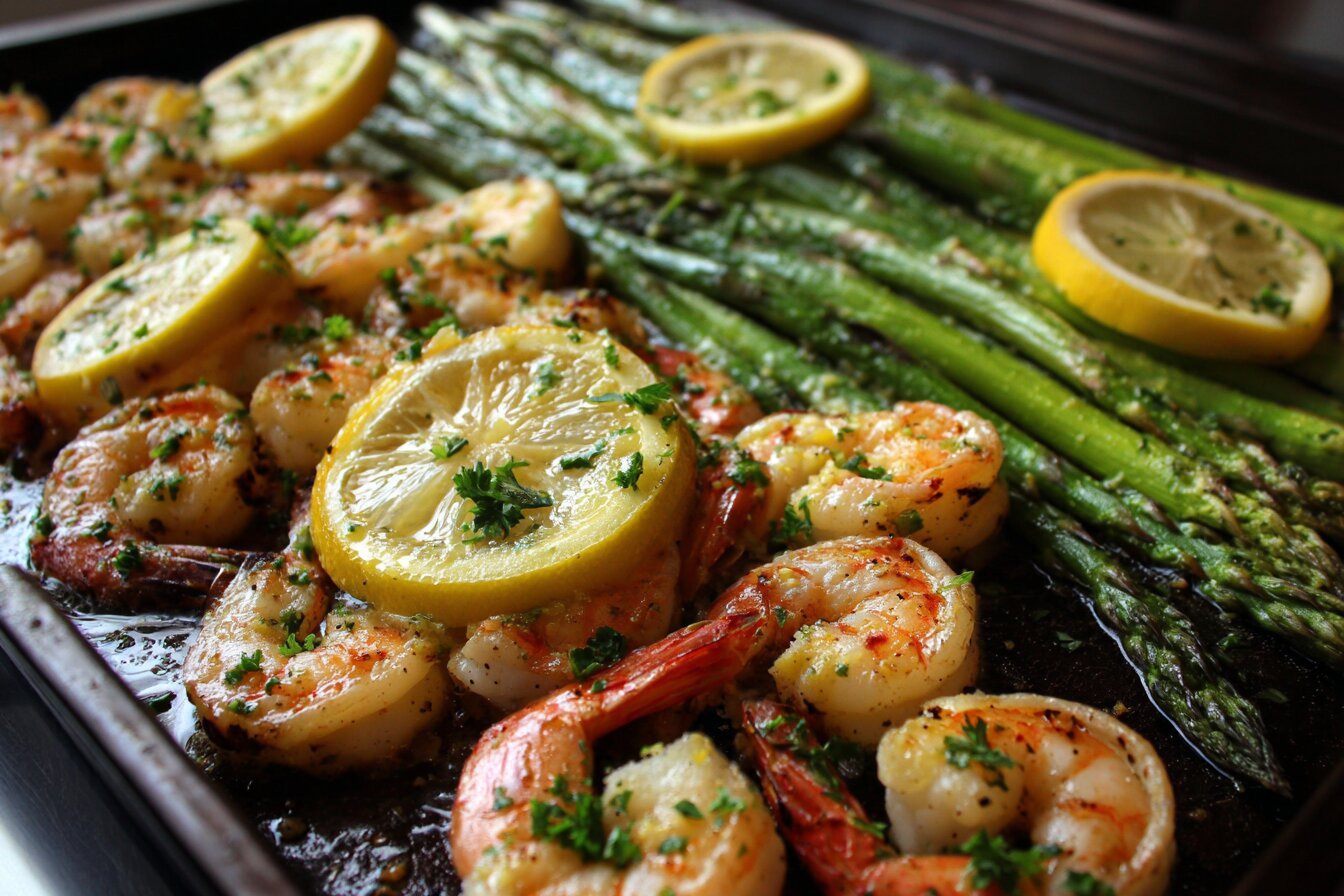
Imagine plump, juicy shrimp and tender-crisp roasted asparagus, all bathed in a rich, golden sauce made of melted butter, zesty lemon, and savory garlic. It’s bright, it’s buttery, and it hits every single taste bud.
In my years as a chef, I’ve learned that the best food is often the simplest. You don’t need complex techniques to make seafood taste good; you just need high-quality ingredients and the right cooking method. Roasting shrimp intensifies their sweetness, while the high heat caramelizes the asparagus tips, giving them a nutty depth that steaming just can’t achieve.
In this deep-dive guide, I will teach you the secret to ensuring your shrimp and asparagus cook perfectly at the same time, how to trim asparagus like a pro without wasting half the stalk, and why butter is actually the best fat for this high-heat method.
Let’s get roasting!
What is a Sheet Pan Meal?
If you are new to the concept, a “sheet pan meal” is exactly what it sounds like. You toss your protein and vegetables onto a rimmed baking sheet, season them, and roast everything together in the oven.
It is a technique that has exploded in popularity, and for good reason. It allows the oven to do the work. The dry heat of the oven roasts the food, creating caramelization (browning) which equals flavor. This is different from a skillet meal, where things can sometimes steam in their own juices if the pan is crowded.
With this specific recipe, we are pairing two ingredients that have very similar cooking times—shrimp and asparagus—making them the perfect candidates for this method.
Why This Recipe Works
As a chef, I am obsessed with “flavor efficiency.” This recipe delivers maximum flavor with minimum effort. Here is the science behind why it works:
- The Emulsion: We create a quick sauce using butter, lemon juice, and garlic. When this hits the hot sheet pan, the butter bubbles and browns slightly (beurre noisette), adding a nutty aroma. The acid from the lemon cuts through that richness, keeping the dish feeling light.
- Complementary Textures: Shrimp has a “snap” when cooked perfectly. Asparagus has a fibrous crunch. By roasting them, we soften the asparagus just enough while keeping the shrimp tender. It’s a texture match made in heaven.
- Nutrient Density: This is a powerhouse meal. It’s packed with lean protein, fiber, vitamins A, C, and K, and healthy fats. It fits almost every diet—Keto, Paleo, Gluten-Free, and Pescatarian.
- No “Fishy” Smell: Roasting seafood produces less odor than pan-frying because the oil isn’t vaporizing into the air as aggressively. Your house will smell like garlic bread, not a fish market.
Ingredient Deep Dive: Selecting the Best
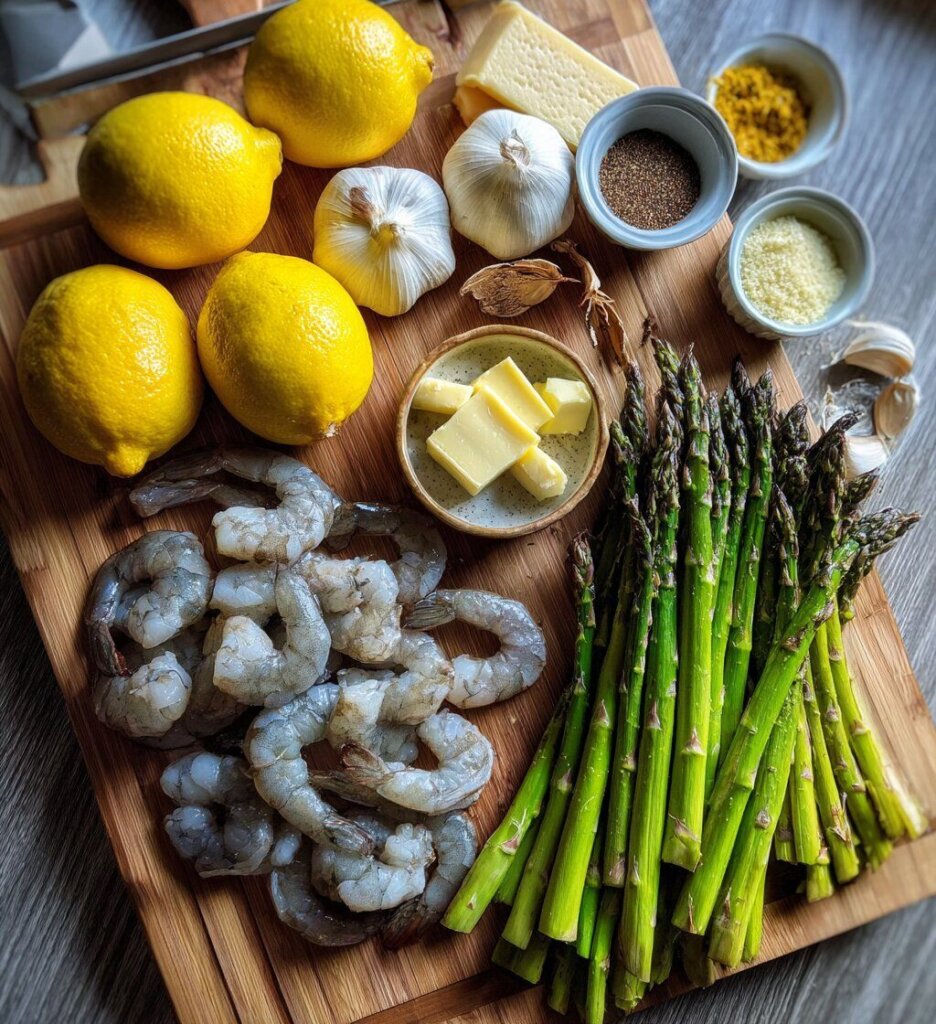
Since there are only a handful of ingredients, quality is paramount. Let’s break down what you need.
The Shrimp
- Fresh vs. Frozen: Unless you live on the coast and are buying from a boat, “fresh” shrimp at the grocery store is usually just frozen shrimp that they thawed for you. Save money and buy a bag of frozen, raw, peeled, and deveined shrimp. Thaw them yourself in cold water for 20 minutes.
- Size Matters: For roasting, I recommend Large (21/25 count) or Extra Large (16/20 count). Tiny shrimp will dry out and turn into rubber bullets before the asparagus is cooked.
- Tail On or Off? This is a personal preference. Tail-on looks prettier for presentation and adds a little more flavor to the juices. Tail-off is easier to eat with a fork. I usually go tail-off for weeknight ease.
The Asparagus
- Thickness: Look for stalks that are medium thickness—about the size of a Sharpie marker. If they are pencil-thin, they will overcook quickly. If they are huge and woody, they might be tough.
- The “Snap” Test: To prep asparagus, hold the spear at both ends and bend it. It will naturally snap exactly where the woody, tough part ends and the tender part begins. Discard the woody ends (or save them for vegetable stock!).
The Garlic Butter
- Butter: Use unsalted butter. This allows you to control the salt level. Shrimp naturally has some sodium, so we don’t want to overdo it.
- Garlic: Fresh is best here. Jarred garlic can have a metallic taste that stands out in such a simple dish. Mince it fine so it melts into the sauce.
- Lemon: You need fresh lemon juice for the acid, and zest for the aroma. The oils in the lemon zest add a perfume that juice alone can’t provide.
Step-by-Step Instructions
This moves fast, so preheat your oven before you start chopping.
Step 1: Preheat and Prep
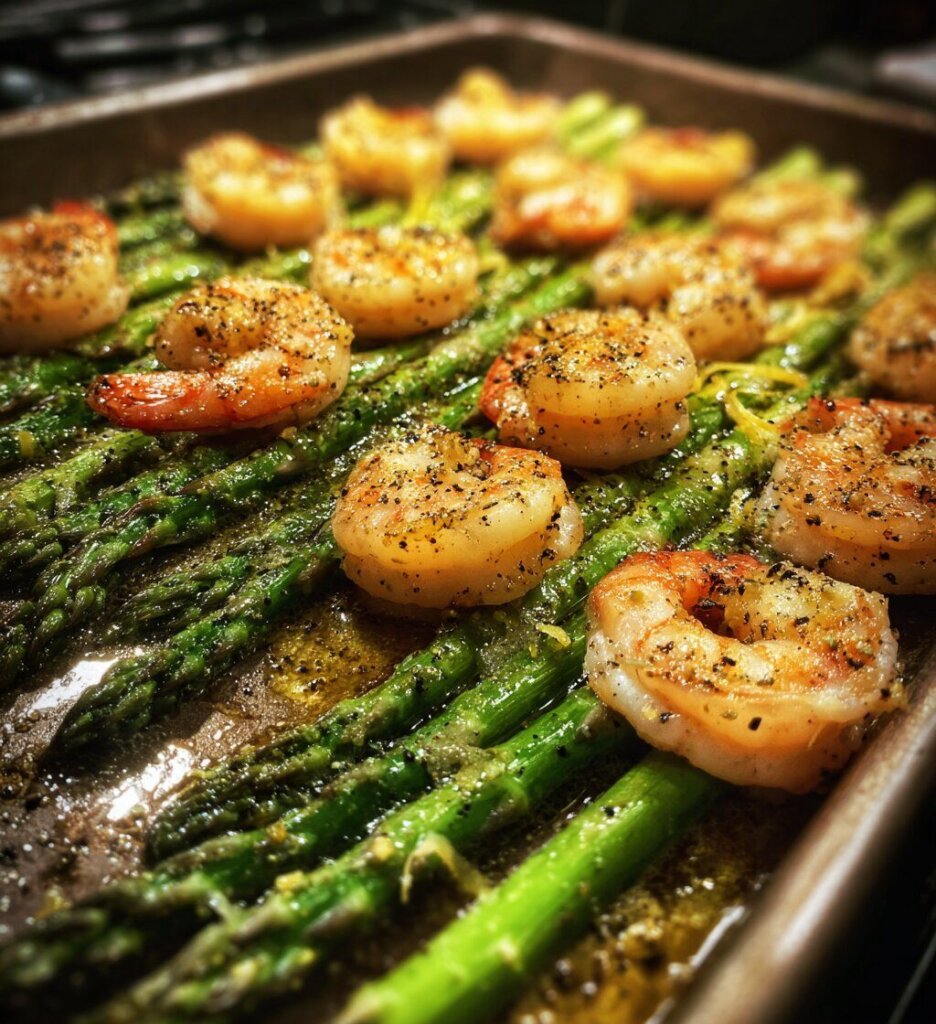
Preheat your oven to 400°F (200°C). Line a large rimmed baking sheet with aluminum foil or parchment paper. This isn’t strictly necessary, but it makes cleanup instant.
- Chef Noah’s Tip: If you use foil, spray it lightly with non-stick spray so the shrimp don’t stick.
Step 2: The Asparagus
Place your trimmed asparagus on the baking sheet. Drizzle with a little olive oil, salt, and pepper. Toss to coat and arrange them in a single layer on one side of the pan.
- Why separate? I like to keep the veg on one side and shrimp on the other initially, just in case the asparagus needs 2-3 extra minutes. If they are mixed, you can’t remove one without the other.
Step 3: The Shrimp
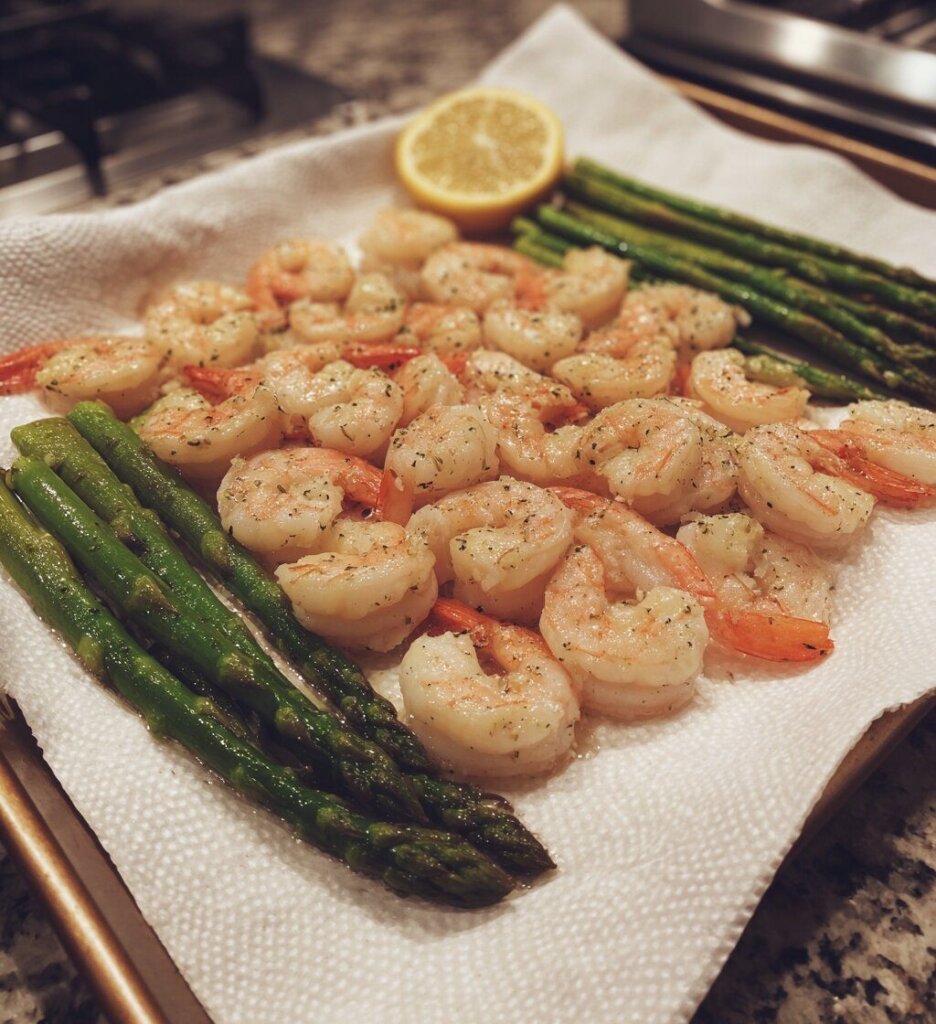
Pat your shrimp very dry with paper towels.
- Crucial Step: If the shrimp are wet, they will steam and release a milky white liquid. We want them dry so they roast and turn pink and golden. Place the shrimp on the other side of the baking sheet.
Step 4: The Flavor Bomb
In a small bowl, whisk together the melted butter, minced garlic, lemon juice, lemon zest, Italian seasoning (or just dried oregano), and paprika. Pour this glorious mixture all over the shrimp and the asparagus. Use your hands or tongs to toss everything gently so it is fully coated in the garlic butter.
Step 5: The Roast
Spread everything out. Do not crowd the pan. Air needs to circulate around each piece of shrimp. Roast for 8 to 12 minutes.
- Timing: This depends on the size of your shrimp. They are done when they are opaque, pink, and curled into a “C” shape. If they curl into an “O” shape, they are overcooked! The asparagus should be fork-tender.
Step 6: The Finish
Remove from the oven. Squeeze a fresh lemon wedge over everything for a final hit of brightness. Garnish with fresh chopped parsley and maybe a sprinkle of parmesan cheese if you are feeling indulgent.
Chef Noah’s Tips for Success
1. The “Par-Bake” Technique If you bought monster-sized thick asparagus spears but small shrimp, the cooking times won’t match. In this case, put the asparagus in the oven first for 5 minutes. Then, pull the pan out, add the shrimp, and roast for another 8 minutes. This ensures both are perfect at the finish line.
2. Don’t Skimp on Butter I know we try to be healthy, but the butter is the sauce. It emulsifies with the shrimp juices to create that liquid gold at the bottom of the pan. If you reduce the butter too much, the dish will be dry.
3. Spice it Up If you like heat, add a pinch of Red Pepper Flakes (chili flakes) to the butter mixture. The heat pairs beautifully with the lemon and garlic.
4. The Broiler Trick If your shrimp are cooked but you want a little char on the asparagus, switch the oven to “Broil” for the last 60 seconds. Watch it closely! Sugar in the garlic can burn fast.
Variations and Dietary Swaps
The beauty of a sheet pan is its versatility. Here are some ways to switch it up:
- Change the Veg: Not an asparagus fan? Use broccoli florets, green beans, or zucchini slices. Just be aware that harder vegetables (like carrots) need to be roasted for 15-20 minutes before you add the shrimp.
- Change the Protein: This lemon garlic butter works amazingly on Salmon fillets (bake for 12-15 mins) or diced Chicken Breast (bake for 15-20 mins).
- Cajun Style: Swap the Italian seasoning for Cajun seasoning (like Slap Ya Mama or Old Bay) for a New Orleans vibe.
- Dairy-Free: Substitute the butter with Ghee (clarified butter) or just use high-quality Olive Oil. It won’t be as creamy, but it will still be delicious.
What to Serve with Sheet Pan Shrimp
This is a very light meal. If you want to bulk it up, here are my suggestions:
- Pasta: Toss the roasted shrimp and asparagus with angel hair pasta. The butter sauce from the pan acts as the pasta sauce.
- Rice: Serve over a bed of fluffy jasmine rice or lemon herb quinoa.
- Crusty Bread: Essential for mopping up the garlic butter left on the baking sheet.
- Cauliflower Rice: Keep it Keto/Low Carb by serving it over roasted cauliflower rice.
- Roasted Potatoes: If you want potatoes, toss small diced potatoes on the pan 20 minutes before the shrimp. They take much longer to cook.
Storage and Reheating
Seafood is best eaten fresh, but leftovers can be saved if handled correctly.
- Fridge: Store in an airtight container for up to 3 days.
- Freezing: I do not recommend freezing cooked shrimp. They become rubbery and watery when thawed.
- Reheating: Do not microwave! The microwave will turn shrimp into rubber. Instead, heat a skillet over medium heat with a little butter and toss the leftovers in just until warm (about 2 minutes). Or, eat it cold over a salad!
Final Thoughts
Sheet Pan Lemon Garlic Butter Shrimp & Asparagus is the dish that will save your weeknight dinner routine. It proves that you don’t need a culinary degree or hours of time to put a nutritious, restaurant-quality meal on the table.
It is vibrant, fresh, and deeply satisfying. The smell of roasting garlic and lemon filling your kitchen is just an added bonus.
So, grab that baking sheet and let the oven do the work tonight.
Happy Cooking! Chef Noah
Print
Sheet Pan Lemon Garlic Butter Shrimp & Asparagus: The 15-Minute Miracle
- Total Time: 22 minutes
- Yield: 4 Servings 1x
- Diet: Gluten Free
Description
A healthy, low-carb sheet pan dinner ready in 15 minutes. Juicy shrimp and tender asparagus roasted in a savory lemon garlic butter sauce.
Ingredients
- 1 lb Large Shrimp (peeled/deveined)
- 1 lb Asparagus (trimmed)
- 4 tbsp Butter (melted)
- 4 cloves Garlic (minced)
- 1 Lemon (juiced and zested)
- 1 tsp Italian Seasoning
- 1/2 tsp Paprika
- 1 tbsp Olive Oil
Instructions
- Preheat oven to 400°F (200°C).
- Place trimmed asparagus and dry shrimp on a baking sheet.
- Whisk melted butter, garlic, lemon juice, zest, and spices together.
- Pour sauce over shrimp and asparagus; toss to coat.
- Roast for 8-12 minutes until shrimp is pink and asparagus is tender.
- Garnish with parsley and serve.
Notes
- Dry Shrimp: Ensure shrimp are patted completely dry before roasting to prevent steaming.
- Timing: If asparagus spears are very thick, roast them for 5 minutes alone before adding shrimp.
- Storage: Best eaten fresh, but keeps 3 days in the fridge.
- Prep Time: 10 minutes
- Cook Time: 12 minutes
- Category: Dinner
- Method: Roasting
- Cuisine: American / Mediterranean
Nutrition
- Serving Size: 1 Serving
- Calories: 280 kcal
- Sugar: 2g
- Sodium: 450mg
- Fat: 18g
- Saturated Fat: 8g
- Unsaturated Fat: 9g
- Trans Fat: 0g
- Carbohydrates: 6g
- Fiber: 3g
- Protein: 24g
- Cholesterol: 185mg
Keywords: Sheet Pan Lemon Garlic Butter Shrimp & Asparagus, Keto Shrimp Recipe, Healthy Sheet Pan Dinner, Roasted Asparagus and Shrimp, 15 Minute Seafood Meal