Sheet Pan Seafood: The “No-Boil” Seafood Boil You Can Make Tonight
There is something legendary about a traditional seafood boil. The giant pot bubbling away in the backyard, the newspaper spread across the picnic table, the mounds of shrimp, corn, and potatoes dumped out for everyone to grab with their bare hands. It is communal, it is messy, and it is undeniably delicious.
But let’s be real: on a random Wednesday night, I am not dragging a 20-gallon stockpot out of the garage. I am not waiting 45 minutes for water to boil. And I am definitely not cleaning up a backyard mess in the dark.
Does that mean we have to sacrifice those flavors? Absolutely not.
Welcome back to Recipes Nora! Today, we are hacking the system with my Sheet Pan Seafood Boil.
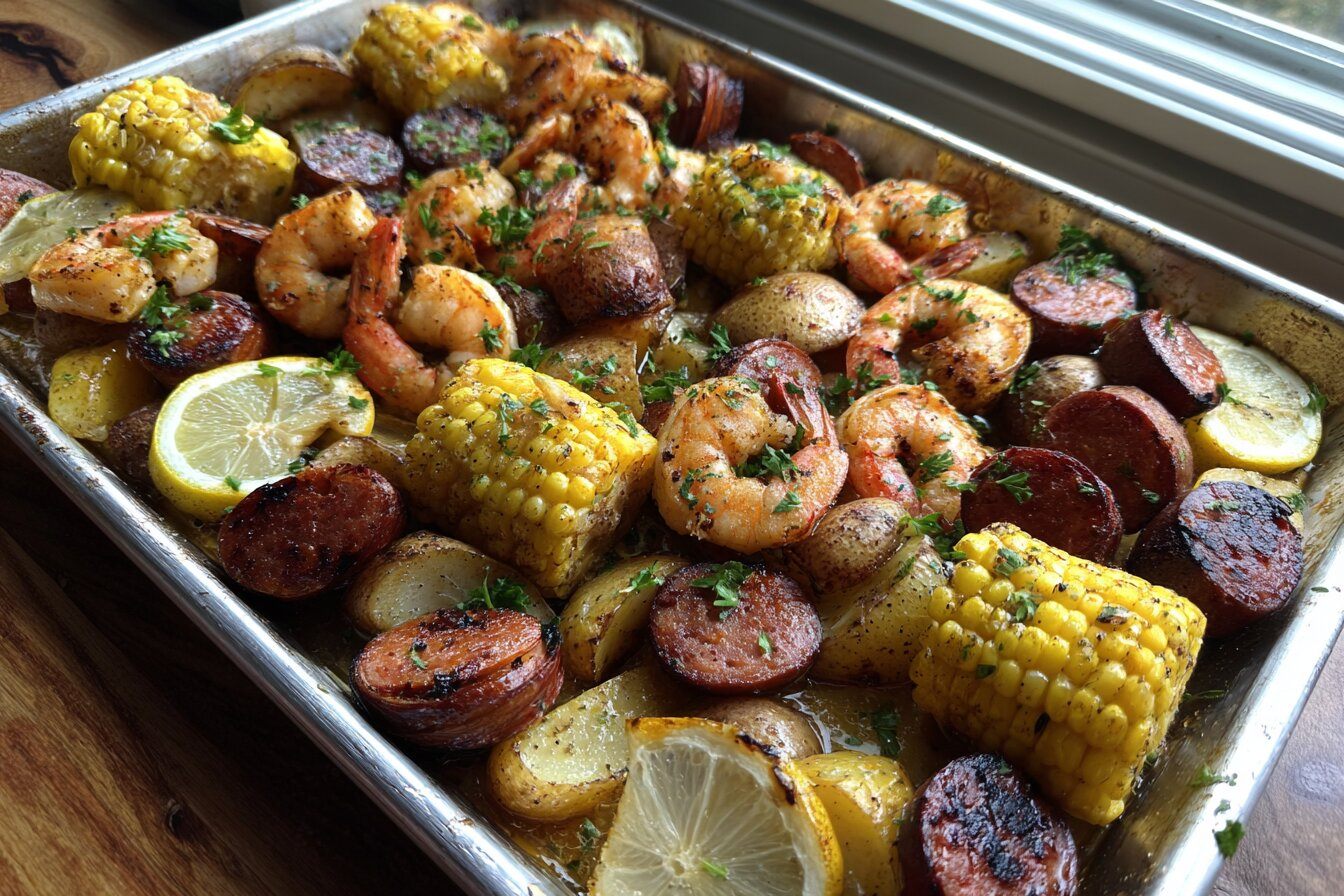
This recipe takes all the iconic elements of a Low Country Boil—plump shrimp, smoky sausage, sweet corn, and tender potatoes—and moves them from the stockpot to the oven.
By roasting instead of boiling, we actually achieve more flavor. Boiling water dilutes taste; roasting concentrates it. The high heat of the oven caramelizes the corn, crisps the edges of the sausage, and intensifies the sweetness of the shrimp, all while bathing everything in a rich, spicy garlic butter sauce.
It is a one-pan miracle that delivers a feast in under 45 minutes, with cleanup so easy you’ll feel like you cheated.
In this deep-dive guide, I will teach you the “staging” technique to ensure your potatoes are tender before your shrimp turns rubbery, the secret to a grit-free garlic butter sauce, and why Andouille sausage is the non-negotiable MVP of this dish.
Let’s get roasting!
What is Sheet Pan Seafood?
This dish is exactly what it sounds like: a complete seafood dinner cooked entirely on a large baking sheet.
While you can make sheet pan fish with asparagus or green beans (which is delicious), this specific recipe is modeled after the “Seafood Boil” experience.
- The Protein: Large shrimp (shells on or off) and smoked sausage.
- The Starch: Baby red potatoes and corn on the cob.
- The Flavor: Old Bay seasoning, Cajun spices, lemon, and an obscene amount of butter.
It is designed to be served family-style. You take the hot pan straight to the table (trivet required!), squeeze fresh lemon over the top, and let everyone dig in. It captures the fun spirit of a summer cookout, but it’s doable in a small apartment kitchen in the middle of winter.
Why This Recipe Works
As a chef, I often prefer dry heat (roasting) over wet heat (boiling) for seafood. Here is the science behind why this method is superior for weeknight cooking.
- Flavor Concentration: When you boil corn or potatoes, some of their natural sugars leach out into the water. When you roast them, the water evaporates, concentrating those sugars. The corn becomes sweeter, and the potatoes become nuttier.
- Texture Contrast: In a traditional boil, everything is soft. In a sheet pan bake, the sausage gets crispy charred edges, the corn kernels pop, and the shrimp gets a nice snap. Texture makes food exciting.
- The “Staged” Cooking Method: The biggest fear with sheet pan meals is uneven cooking. Potatoes take 30 minutes; shrimp takes 8. If you throw them all in at once, you either have raw potatoes or rubber shrimp. We solve this by adding ingredients in shifts. It sounds complicated, but it’s actually foolproof.
- The Sauce Factor: Instead of seasoning the water, we toss the ingredients directly in a concentrated garlic butter sauce before and after cooking. The flavor clings to the food, not the pot.
Ingredient Deep Dive: The Boil Blueprint
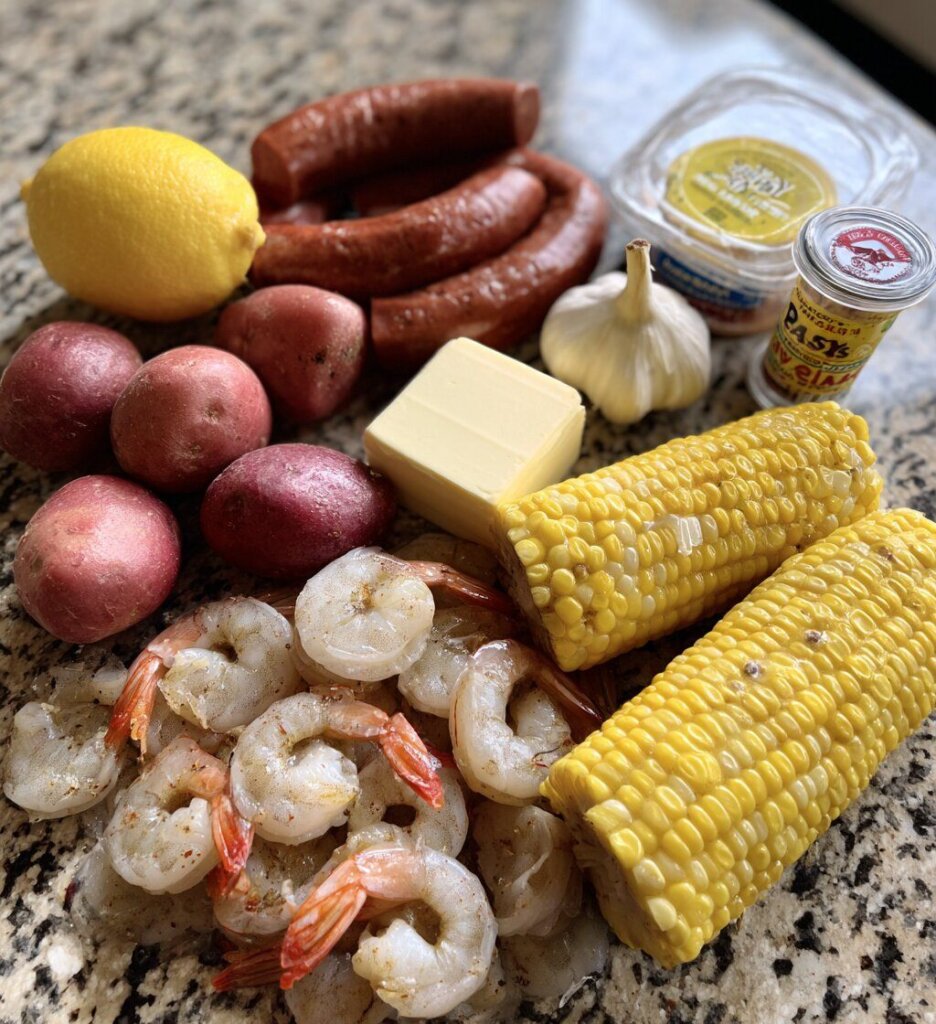
To replicate that authentic coastal flavor, we need to choose our players carefully.
The Shrimp
- Size Matters: Use Jumbo or Extra Large (16/20 count) shrimp. Tiny shrimp will dry out instantly in a 400°F oven. You need meaty shrimp that can withstand the heat.
- Shell On vs. Off: This is a personal preference. Keeping the shells on protects the meat from drying out and adds more flavor to the sauce (shells are flavor bombs). However, peeling them at the table is messy. If you want an easier eating experience, buy peeled and deveined shrimp (tails on).
The Sausage
- Andouille: This is the gold standard. It is a smoked pork sausage with Cajun spices. It provides the smoky backbone of the dish.
- Kielbasa: If you can’t find Andouille or want less heat, smoked Kielbasa is a perfect substitute.
- The Cut: Slice it on a bias (angle). This creates more surface area for browning, which means more flavor.
The Veggies
- Baby Potatoes: Look for the tiny red or gold “creamer” potatoes. If they are truly bite-sized, you can leave them whole. If they are larger than a golf ball, halve or quarter them. Consistency is key for cooking time.
- Corn: Fresh corn on the cob is best. Shuck it and cut it into “wheels” or “riblets” (about 1.5 to 2 inches thick). If using frozen corn, thaw it completely and pat it dry before roasting, or it will water down your sauce.
The Seasoning (Old Bay)
- The Classic: Old Bay is a blend of celery salt, paprika, black pepper, and other spices. It is the taste of a seafood boil. If you don’t have it, you can make a blend using celery salt, paprika, and cayenne.
- Cajun Seasoning: I like to add a teaspoon of Cajun seasoning (like Tony Chachere’s or Slap Ya Mama) for an extra kick of heat and salt.
Step-by-Step Instructions
The key to success here is timing. We are going to cook in two main stages.
Step 1: The Potato Head Start
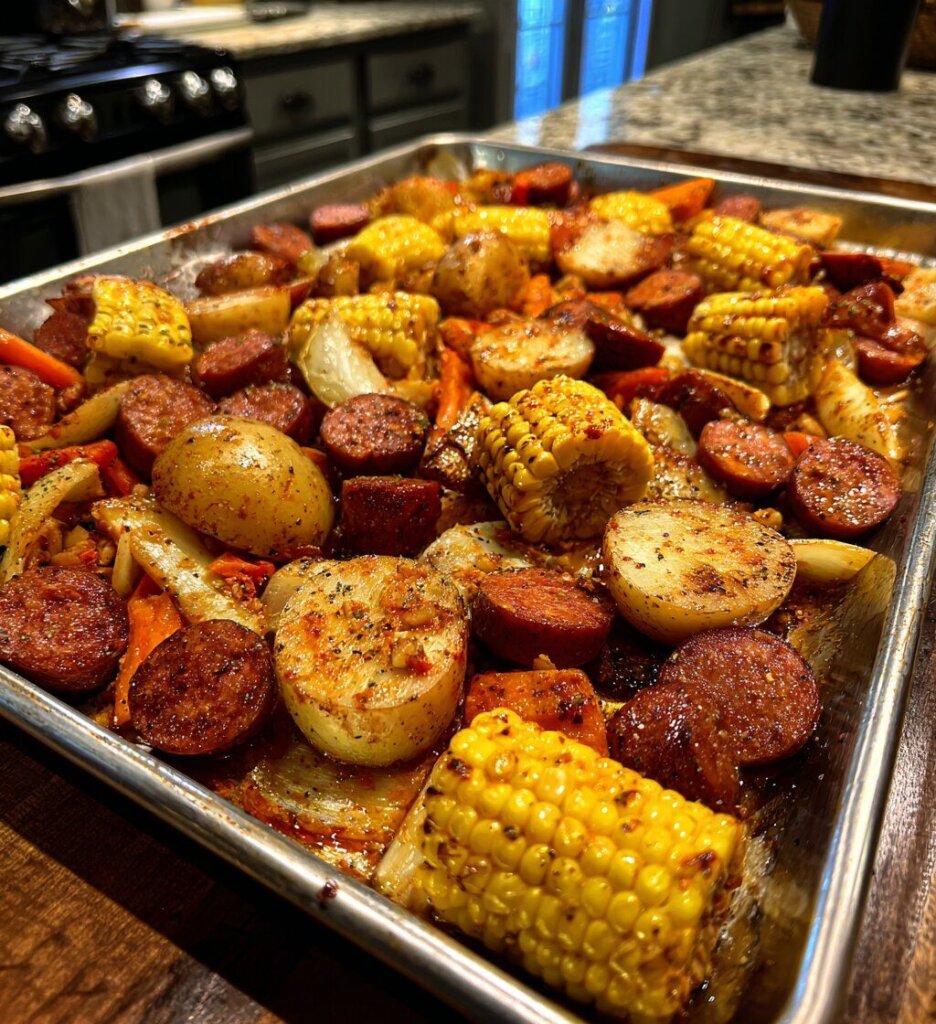
Preheat your oven to 400°F (200°C). Place your halved potatoes and corn wheels in a large pot of salted water. Bring to a boil and cook for just 8-10 minutes.
- Chef Noah’s Tip: “Wait, you said no boiling!” Okay, you caught me. You can roast the potatoes raw, but it takes 40 minutes. Par-boiling them for just 10 minutes ensures the insides are creamy while the oven crisps the outside. It saves oven time and guarantees perfect texture. Drain them well and let them steam dry for a minute.
Step 2: The Garlic Butter Base
While the veggies par-boil, melt your butter in a small bowl. Whisk in the minced garlic, Old Bay seasoning, Cajun seasoning, lemon juice, and a dash of hot sauce. This liquid gold is the lifeblood of the dish.
Step 3: Roast the “Hard” Ingredients
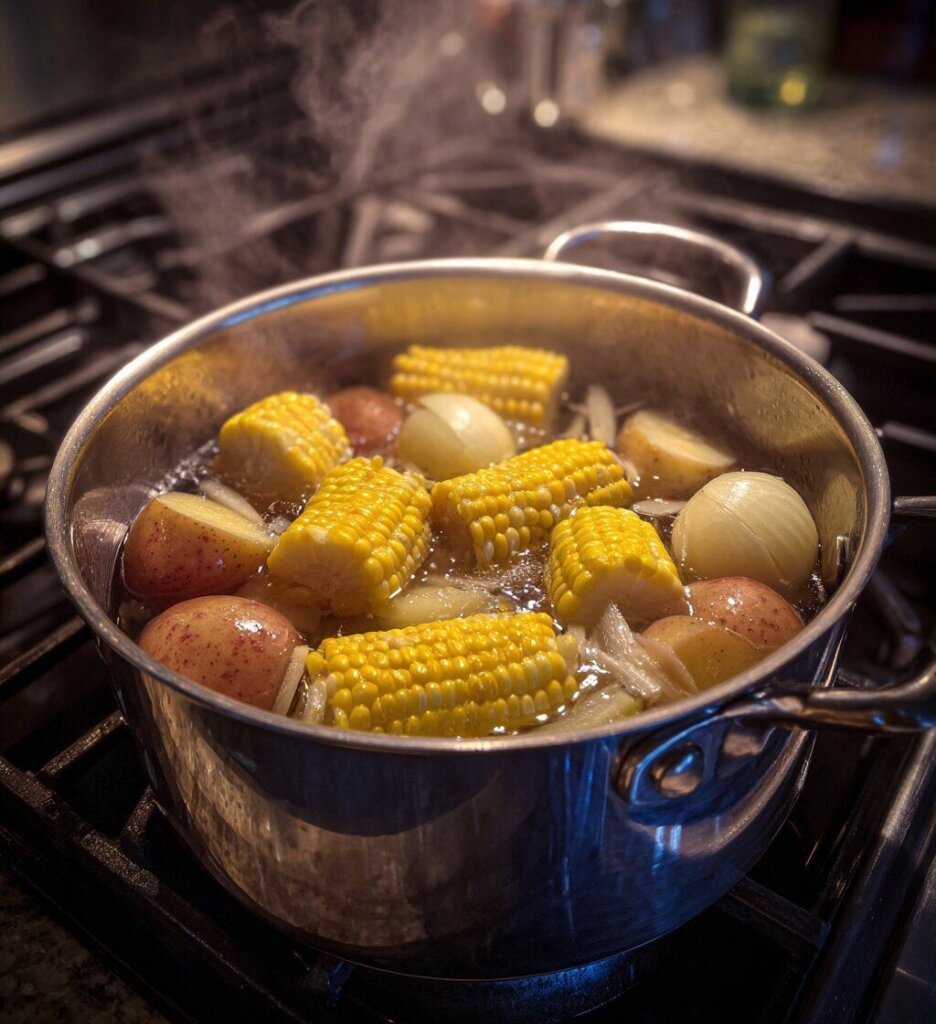
Dump the drained potatoes, corn, and sliced sausage onto your largest baking sheet. Drizzle with half of the garlic butter mixture. Toss well to coat. Spread them out in a single layer. Roast for 15 minutes. You want the sausage to start browning and the corn to look vibrant.
Step 4: Add the Seafood
Pull the pan out of the oven. Scatter the raw shrimp over the top of the sausage and veggies. Drizzle the remaining garlic butter sauce over the shrimp.
- Note: If you are adding other quick-cooking seafood like scallops or asparagus, add them now too. Return to the oven for 8-10 minutes.
Step 5: The Finish
The shrimp is done when it is pink, opaque, and firm. Remove from the oven immediately. Squeeze fresh lemon wedges over the entire tray and shower it with chopped fresh parsley. Serve hot, directly from the pan!
Chef Noah’s Tips for Success
1. Use a Rimmed Baking Sheet Do not use a flat cookie sheet! The butter and juices from the sausage will run off and burn on the bottom of your oven, setting off your smoke alarm. Use a “half sheet pan” with a 1-inch rim.
2. Don’t Crowd the Pan If your pan is overcrowded, the food will steam instead of roast. If you are doubling this recipe for a crowd, use two sheet pans and rotate them halfway through. Everything should be in a (mostly) single layer.
3. Dry the Shrimp Water is the enemy of butter sauce. Pat your shrimp dry with paper towels before tossing them in the sauce. If they are wet, the butter sauce will slide right off, and you’ll end up with flavorless shrimp in a puddle of water.
4. The “Soggy Corn” Fix If using frozen corn, it tends to release water. I recommend cutting frozen cobs while they are still semi-frozen, then letting them thaw on a paper towel to absorb excess moisture before cooking.
Variations and Dietary Swaps
- The “Fancy” Bake: Add 1 pound of scrubbed Littleneck Clams or Mussels during the shrimp stage. They will pop open in the oven heat. (Discard any that don’t open).
- Low Carb / Keto: Skip the potatoes and corn. Instead, use chunks of Zucchini, Bell Peppers, and Cauliflower florets. Roast the veg/sausage for 15 mins, then add shrimp.
- Mild Version: If feeding kids, skip the Cajun seasoning and hot sauce. Stick to just Old Bay (which is mild) and lemon butter.
- Pescatarian: Omit the sausage. To replace the smoky flavor, add 1 teaspoon of Smoked Paprika to the butter sauce.
What to Serve with Sheet Pan Seafood
This is a hearty meal, so keep the sides simple and capable of soaking up sauce.
- Crusty Bread: A French baguette or sourdough is mandatory for mopping up the spicy garlic butter left on the tray.
- Coleslaw: A creamy, cold coleslaw provides a crunchy, cooling contrast to the hot, spicy cajun flavors.
- Green Salad: A simple Caesar salad or garden salad helps lighten up the meal.
- Rice: If you want to stretch the meal further, serve scoops of the bake over steamed white rice.
Storage and Reheating
Seafood boils are best eaten fresh, but leftovers can be transformed.
- Fridge: Store in an airtight container for up to 3 days.
- Reheating:
- Oven: Place leftovers on a baking sheet, cover loosely with foil (to trap moisture), and heat at 300°F for 10-15 minutes.
- Sauté Pan: Toss leftovers in a hot skillet with a splash of water or butter until heated through.
- Leftover Hack: Chop up the leftover shrimp, sausage, and potatoes and toss them into a frittata or an omelet for breakfast the next day!
Final Thoughts
Sheet Pan Seafood is a celebration of flavor with zero pretension. It’s loud, it’s colorful, and it brings people together. It proves that you don’t need a beach house or a giant pot to enjoy the best flavors of the coast.
With a little strategic timing and a lot of garlic butter, you can turn your oven into a seafood shack any night of the week.
So, grab your biggest baking sheet and let’s make some mess (the good kind).
Happy Cooking! Chef Noah
Print
Sheet Pan Seafood: The “No-Boil” Seafood Boil You Can Make Tonight
- Total Time: 40 minutes
- Yield: 4 Servings 1x
- Diet: Gluten Free
Description
A no-mess Low Country Boil made on a single sheet pan. Roasted shrimp, sausage, corn, and potatoes tossed in a spicy garlic butter sauce.
Ingredients
- 1.5 lbs Jumbo Shrimp
- 1 lb Andouille Sausage
- 1.5 lbs Baby Potatoes
- 4 ears Corn
- 1/2 cup Butter
- 2 tbsp Old Bay
- 4 cloves Garlic
Instructions
- Par-boil potatoes and corn for 10 minutes; drain.
- Whisk melted butter with garlic, Old Bay, and lemon.
- Roast potatoes, corn, and sausage with half the sauce at 400°F for 15 mins.
- Add shrimp and remaining sauce. Roast 8-10 mins more.
- Garnish with parsley and lemon.
Notes
- Par-boiling: Boiling the potatoes first ensures they are creamy inside and crisp outside.
- Shrimp: Use large shrimp so they don’t overcook before the veggies are done.
- Spice Level: Adjust the Cajun seasoning and hot sauce to your family’s preference.
- Prep Time: 15 minutes
- Cook Time: 25 minutes
- Category: Dinner
- Method: Roast
- Cuisine: American / Cajun
Nutrition
- Serving Size: 1 Serving
- Calories: 580 kcal
- Sugar: 6g
- Sodium: 1100mg
- Fat: 32g
- Saturated Fat: 14g
- Unsaturated Fat: 15g
- Trans Fat: 0g
- Carbohydrates: 35g
- Fiber: 4g
- Protein: 38g
- Cholesterol: 240mg
Keywords: Sheet Pan Seafood Boil, Sheet Pan Shrimp Boil, Low Country Boil Oven Recipe, Seafood Bake, Garlic Butter Shrimp and Sausage, Easy Family Dinner