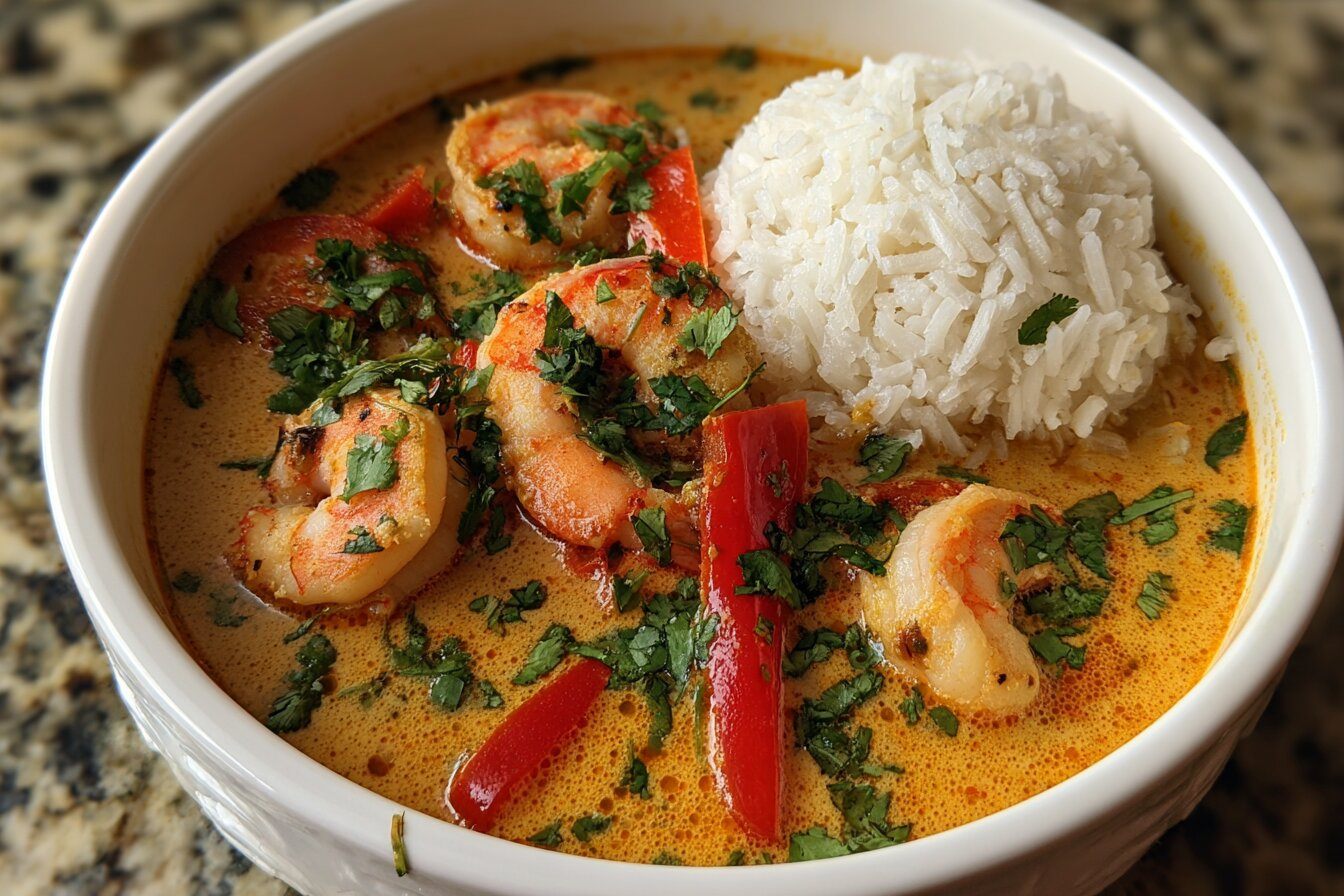
Coconut Curry Shrimp: The 20-Minute Meal That Tastes Like a Vacation
Some days, you just need an escape. You look out the window, and it’s raining (or snowing, or just annoyingly grey), and all you want is to be somewhere tropical. Somewhere with warm sand, palm trees, and food that tastes like sunshine.
While I can’t buy you a plane ticket, I can give you the next best thing: a bowl of my Coconut Curry Shrimp.
Welcome back to Recipes Nora! Today, we are making a dish that is on permanent rotation in my kitchen because it hits the “High Reward / Low Effort” sweet spot perfectly.
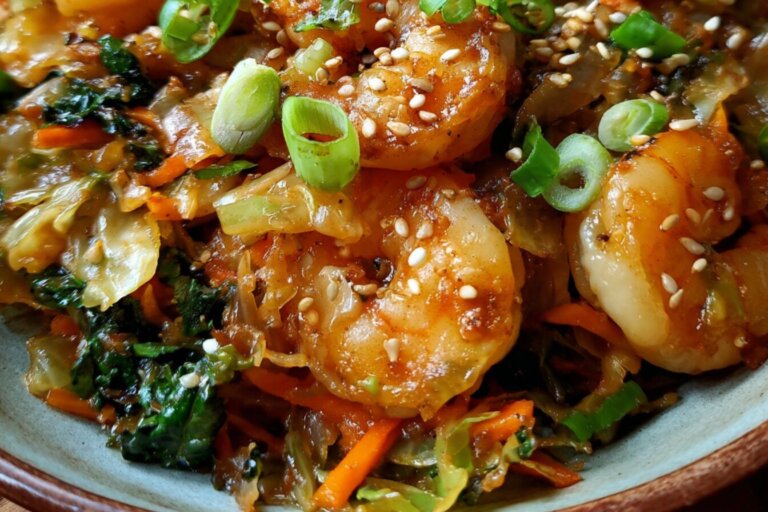
This curry is luxurious. It features plump, juicy shrimp swimming in a golden broth made of coconut milk, red curry paste, ginger, and lime. It’s creamy without being heavy. It’s spicy without being overwhelming. And it has a depth of flavor that makes people assume you spent hours simmering a master stock, when in reality, you threw it together in less time than it takes to watch a sitcom episode.
Whether you serve it over fluffy jasmine rice to soak up that liquid gold sauce or with crusty bread for dipping, this meal is pure comfort.
In this deep-dive guide, I will teach you the difference between Thai curry pastes (and which one to buy), how to keep your shrimp snappy and tender, and why fish sauce is the secret ingredient you absolutely cannot skip.
Let’s get cooking!
What is Coconut Curry Shrimp?
This dish is a Thai-inspired curry, meaning it relies on a paste of aromatics (chilies, lemongrass, galangal) bloomed in fat, then simmered with coconut milk.
Unlike Indian curries, which often start with dry spices (cumin, coriander, turmeric) and onions, Thai curries start with a wet paste. This gives them a brighter, fresher flavor profile.
- The Base: Full-fat coconut milk provides the rich, velvety texture.
- The Heat: Red curry paste brings the chili heat and the aromatic complexity.
- The Acid: Fresh lime juice cuts through the fat of the coconut milk, waking up the entire palate.
- The Funk: Fish sauce adds the essential salty umami punch that defines Southeast Asian cuisine.
It is a dish that balances the five fundamental tastes: Sweet, Salty, Sour, Bitter, and Spicy.
Why This Recipe Works
As a chef, I love this recipe because it is essentially “foolproof fusion.”
- Fast Flavor Release: Because we use a pre-made curry paste (which contains concentrated ingredients like shrimp paste and kaffir lime peel), we don’t need to chop 20 different herbs. The flavor is already built-in.
- Gentle Poaching: Shrimp is easy to overcook. In this recipe, we actually cook the shrimp in the sauce. This gentle simmering ensures they stay tender and absorb flavor simultaneously, rather than searing them hard and drying them out.
- Customizable Heat: You control the spice level. Want it mild? Use less paste and more brown sugar. Want it to clear your sinuses? Add fresh Thai bird chilies.
- Vegetable Friendly: While shrimp is the star, this sauce is amazing on anything. You can easily toss in bell peppers, snap peas, or spinach to make it a one-pot nutritional powerhouse.
Ingredient Deep Dive: The Thai Pantry
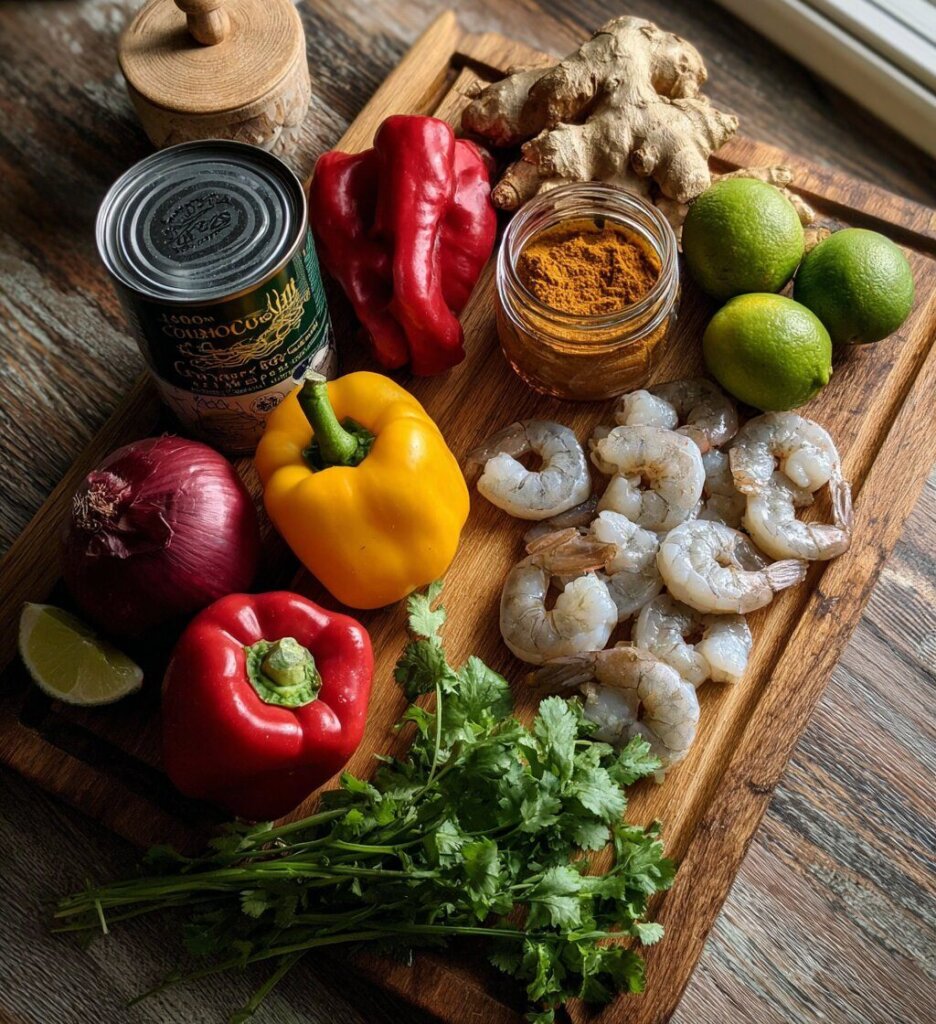
To make this taste authentic, we need to visit the international aisle. Don’t worry—all of these ingredients are now standard in most supermarkets.
The Shrimp
- Size: Large (21/25 count) or Extra Large is best. You want a meaty bite.
- Prep: Peel and devein them. You can leave the tails on for presentation (it looks fancy), but taking them off makes it easier to eat with a spoon.
- Frozen: Raw frozen shrimp works perfectly. Thaw them under cold water. Do not use pre-cooked shrimp; they will turn into rubber bullets in the curry.
The Coconut Milk
- Full Fat vs. Light: Please, I beg you, use Full-Fat Canned Coconut Milk. Light coconut milk is just watered down. You need the fat to carry the spice and create that silky mouthfeel. If the can separates into thick cream and water, that’s a good sign! Use it all.
The Curry Paste
- Red Curry Paste: This is the standard for shrimp curries. It’s made from red chilies, garlic, lemongrass, and galangal. Brands like Thai Kitchen or Mae Ploy are excellent.
- Note: Mae Ploy is much spicier and saltier than Thai Kitchen. If using Mae Ploy, start with half the amount.
The Aromatics
- Ginger & Garlic: Even though the paste has some, adding fresh minced ginger and garlic at the start makes the curry taste “homemade” rather than “jarred.”
- Fish Sauce: This smells pungent in the bottle, but in the dish, it transforms into savory magic. Do not skip it. If you are allergic to fish, use soy sauce, but the flavor will be slightly different.
- Brown Sugar: A little sweetness is needed to balance the heat of the chilies and the salt of the fish sauce.
Step-by-Step Instructions
This recipe moves at lightning speed. Have your rice cooking before you start the curry!
Step 1: Bloom the Aromatics
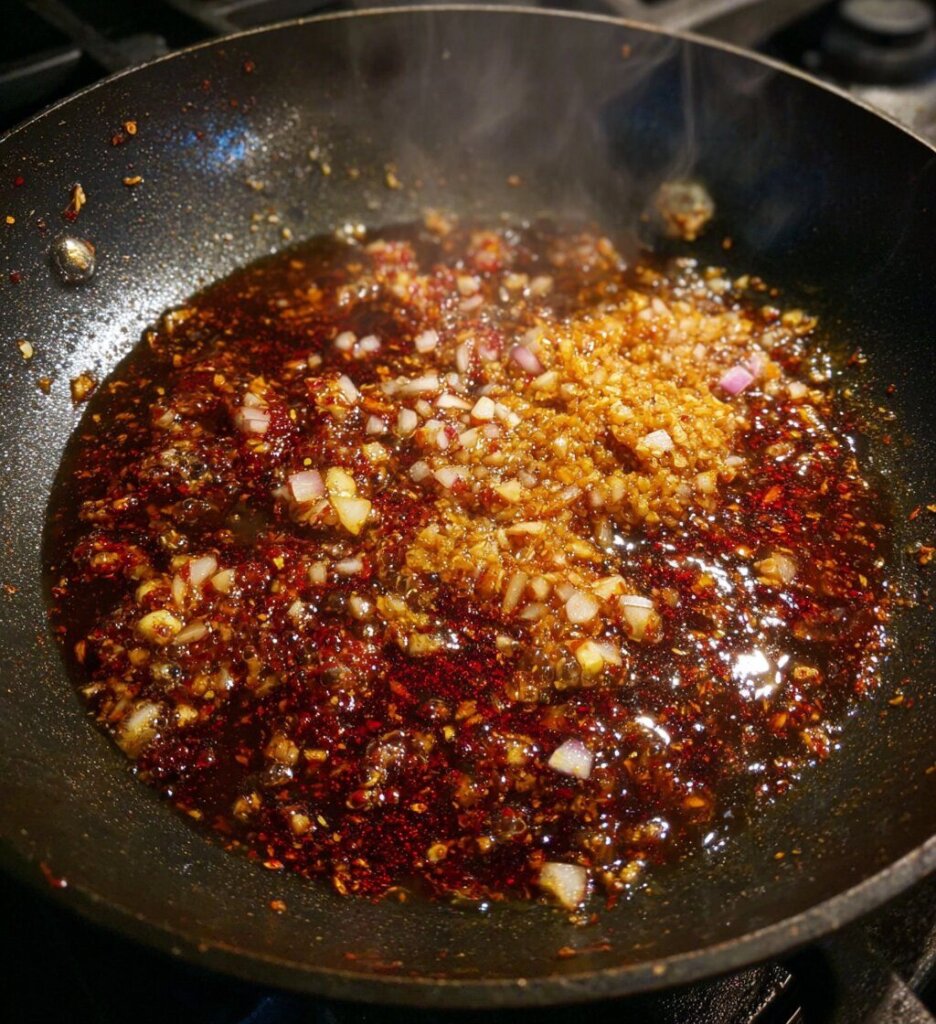
Heat a tablespoon of oil (coconut oil or vegetable oil) in a large deep skillet or Dutch oven over medium heat. Add the minced onion and cook for 3-4 minutes until soft. Add the minced garlic, fresh ginger, and the red curry paste. Crucial Step: Mash the paste into the onions and cook for 2 minutes. You want the paste to darken slightly and become incredibly fragrant. This “blooming” process cooks out the raw taste of the chilies.
Step 2: Build the Sauce
Pour in the can of coconut milk. Use your spoon to scrape up any browned bits of paste from the bottom of the pan. Stir in the brown sugar and fish sauce. Bring the mixture to a gentle simmer. Let it bubble for 5 minutes. The sauce will thicken slightly and turn a beautiful pumpkin-orange color.
Step 3: Cook the Shrimp
Add the raw, peeled shrimp to the simmering sauce. If you are adding quick-cooking veggies like snap peas or bell pepper strips, add them now too. Simmer gently for 3 to 5 minutes.
- Check: The shrimp are done when they turn pink, opaque, and curl into a loose “C” shape. Do not boil vigorously, or the shrimp will toughen.
Step 4: The Finish
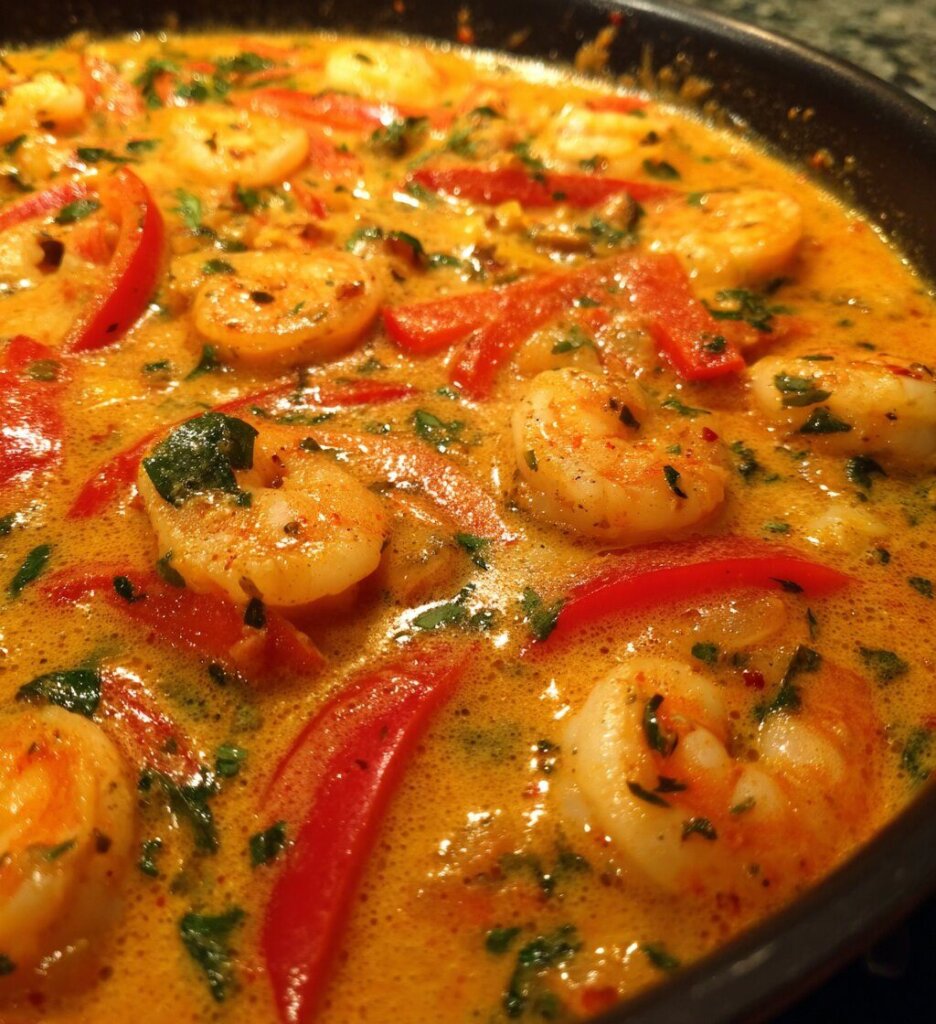
Turn off the heat. (This is important! Boiling lime juice can make it bitter). Stir in the fresh lime juice. Taste the sauce!
- Too Spicy? Add a splash more coconut milk or sugar.
- Too Bland? Add a dash more fish sauce or salt.
- Need Acid? Squeeze in more lime.
Step 5: Serve
Ladle the curry over steaming jasmine rice. Garnish generously with chopped fresh cilantro (or basil if you hate cilantro) and extra lime wedges.
Chef Noah’s Tips for Success
1. Don’t Shake the Can (At First) When you open a can of high-quality coconut milk, there is often a thick layer of coconut cream at the top. Scoop this thick cream into the pan with the curry paste in Step 1. Fry the paste in the coconut cream until the oil separates. This is a traditional Thai technique called “cracking the coconut cream” and adds incredible flavor. Then pour in the rest of the watery milk.
2. The Vegetable Timing If you want to add harder vegetables like carrots or potatoes, you need to add them before the shrimp. Add them in Step 2 and let them simmer in the sauce for 10 minutes until soft, then add the shrimp. Shrimp should always be the last thing to enter the pot.
3. Fresh Herbs Matter Thai food relies on fresh herbs for brightness. Cilantro is classic. Thai Basil (which has purple stems and a licorice flavor) is even better if you can find it. Regular sweet basil works in a pinch. Stir the herbs in at the very end so they stay green.
4. Rice Pairing Jasmine rice is the perfect partner for this dish because it has a natural floral aroma that complements the coconut. Basmati rice is okay, but Jasmine is better. For a low-carb option, serve over Cauliflower Rice—the sauce is so flavorful you won’t notice the difference.
Variations and Dietary Swaps
- Protein Swap: This sauce is universal. Use sliced chicken breast (simmer for 8-10 mins), cubed tofu (simmer for 5 mins), or white fish chunks (cod or halibut).
- Vegan Version: Swap the shrimp for Tofu or Chickpeas. Swap the Fish Sauce for Soy Sauce or a Vegan Fish Sauce substitute. Ensure your curry paste doesn’t contain shrimp paste (check the label).
- Green Curry: Swap the Red Curry Paste for Green Curry Paste. Green curry is typically sweeter and spicier. Add bamboo shoots and green beans for a classic combo.
- Noodle Soup: Add chicken broth to thin the sauce out, and serve it over rice noodles for a “Khao Soi” style soup.
What to Serve with Coconut Curry Shrimp
While Rice is the standard, here are other ways to round out the meal.
- Naan or Roti: Flatbread is great for dipping.
- Cucumber Salad: A tangy, vinegary cucumber salad provides a cooling crunch against the warm, creamy curry.
- Roasted Bok Choy: Simple greens with garlic.
- Mango Sticky Rice: If you want to go all out with a Thai-themed dinner, finish with mango for dessert!
Storage and Reheating
This dish reheats surprisingly well, though you have to be careful not to overcook the shrimp.
- Fridge: Store in an airtight container for up to 3 days.
- Freezing: Coconut milk can separate when frozen, creating a grainy texture. It’s safe to eat, but the texture suffers. I recommend eating this fresh.
- Reheating:
- Stovetop: Heat gently on low heat. Do not let it come to a rolling boil. Just warm it until the shrimp are hot.
- Microwave: Heat in 1-minute intervals at 50% power to avoid rubbery shrimp.
Final Thoughts
Coconut Curry Shrimp is a miracle meal. It transforms a humble bag of frozen shrimp and a can of coconut milk into something that feels sophisticated and exotic.
It’s vibrant, colorful, and packed with layers of flavor that usually take hours to develop. But in your kitchen? It takes 20 minutes.
So, put on some tropical music, crack open that coconut milk, and let’s get simmering.
Happy Cooking! Chef Noah
Print
Coconut Curry Shrimp: The 20-Minute Meal That Tastes Like a Vacation
- Total Time: 20 minutes
- Yield: 4 Servings 1x
Description
A quick and flavorful Thai-inspired curry featuring tender shrimp in a creamy coconut red curry sauce with ginger and lime.
Ingredients
- 1.5 lbs Large Shrimp
- 1 can Coconut Milk
- 2 tbsp Red Curry Paste
- 1 Onion
- 1 Red Bell Pepper
- 1 tbsp Fish Sauce
- 1 tbsp Lime Juice
- 1 tbsp Ginger
Instructions
- Sauté onion and peppers in oil.
- Add curry paste, garlic, and ginger; cook until fragrant.
- Stir in coconut milk, fish sauce, and sugar; simmer.
- Add shrimp and cook 3-5 minutes until pink.
- Stir in lime juice and serve over rice.
Notes
- Curry Paste: Adjust the amount based on the brand’s spice level.
- Coconut Milk: Use full-fat for the best texture.
- Vegetables: Feel free to add spinach, snap peas, or bamboo shoots.
- Prep Time: 10 minutes
- Cook Time: 10 minutes
- Category: Dinner
- Method: Stovetop
- Cuisine: Thai Fusion
Nutrition
- Serving Size: 1 Bowl (without rice)
- Calories: 380 kcal
- Sugar: 4g
- Sodium: 850mg
- Fat: 24g
- Saturated Fat: 18g
- Unsaturated Fat: 4g
- Trans Fat: 0g
- Carbohydrates: 12g
- Fiber: 2g
- Protein: 32g
- Cholesterol: 220mg
Keywords: Coconut Curry Shrimp, Thai Shrimp Curry, Easy Curry Recipe, 20 Minute Dinner, Dairy Free Creamy Shrimp, Red Curry Recipe