
Classic Cioppino: The Ultimate San Francisco Fisherman’s Stew
If there is one dish that captures the soul of the ocean in a single bowl, it is Cioppino. It is a dish that demands attention. It is vibrant red, overflowing with shells and claws, steaming with aromatic herbs, and begging to be eaten with a piece of crusty sourdough bread in one hand and a spoon in the other.
Welcome back to Recipes Nora! Today, we are tackling a recipe that looks intimidating but is actually wonderfully rustic and forgiving: Classic Cioppino.
Originating from the wharves of San Francisco, this tomato-based seafood stew is a masterpiece of Italian-American ingenuity. It was the original “catch of the day” meal, thrown together by fishermen using whatever was left in their nets after a long day at sea. Today, it has evolved into a celebratory feast, perfect for Christmas Eve (the Feast of the Seven Fishes), dinner parties, or any night you want to feel like a gourmet chef.
Many people only order this at restaurants because they fear overcooking the seafood or dealing with the shells. But I am here to tell you that making Cioppino at home is easier than you think. The secret lies in the layering—building a rich, flavorful broth first, then gently poaching the seafood at the very end.
In this guide, I will walk you through how to select the freshest seafood, how to build a robust alcohol-free broth that rivals any wine-based version, and how to time your cooking so every shrimp and scallop is tender perfection.
Let’s head to the coast!
The History of Cioppino
Before we light the stove, it helps to understand the spirit of this dish. Unlike Bouillabaisse (its French cousin), which is saffron-heavy and refined, Cioppino is bold, tomato-forward, and hearty.
It was created in the late 1800s by Italian fishermen—mostly Genoese—who settled in the North Beach area of San Francisco. The legend goes that when a fisherman came back empty-handed, he would walk around the docks with a pot, asking other fishermen to chip in. “Chip in! Chip in!” eventually morphed into “Cioppino” (though linguists argue it actually comes from the Ligurian word ciuppin, meaning “to chop” or “little soup”).
Regardless of the etymology, the philosophy remains the same: use the best of what the ocean gives you. This means the recipe is inherently flexible. If Dungeness crab isn’t in season, you use snow crab. If you can’t find halibut, you use cod. It is a communal, adaptable dish that celebrates abundance.
Why This Recipe Works
As a chef, I love recipes that look like a lot of work but are actually mostly just assembly. Here is why my Classic Cioppino is a winner:
- The “Base” is Make-Ahead Friendly: The magic of Cioppino is in the tomato broth. You can make this base a day (or even two) in advance. In fact, the flavor improves as it sits. When your guests arrive, you simply bring it to a boil and drop in the fish.
- Alcohol-Free Depth: Traditional recipes rely on a bottle of red or white wine for acidity. In my kitchen, we skip the wine but keep the complexity. We use a combination of high-quality clam juice (or seafood stock), fennel, and a splash of red wine vinegar. This mimics the tartness and depth of wine without the alcohol, keeping the broth bright and savory.
- Texture Variety: This stew is an adventure for the palate. You get the flake of the white fish, the snap of the shrimp, the chew of the clams, and the sweet tenderness of the crab.
- Interactive Dining: Because the shellfish is often served in the shell, this is a hands-on meal. It forces everyone to slow down, crack some claws, and truly enjoy the experience of eating together.
Ingredient Deep Dive: The Ocean’s Best

To make a truly spectacular Classic Cioppino, sourcing your ingredients is 90% of the battle. Let’s break down the shopping list.
The Seafood (The Stars of the Show)
- Dungeness Crab: This is the traditional San Francisco choice. It is sweet and meaty. You can buy it pre-cooked and cleaned from the fishmonger to save time. If you can’t find Dungeness, Snow Crab legs or King Crab legs are excellent substitutes.
- Clams and Mussels: These bivalves add a briny, ocean liquor to the stew that you cannot replicate with salt. Look for Littleneck or Manila clams. Ensure they are closed tightly before cooking. If they are open and don’t close when tapped, discard them—they are dead.
- Shrimp: Large shrimp (16/20 count) are best. I prefer to peel and devein them but leave the tails on for presentation.
- Firm White Fish: You need a fish that won’t disintegrate when stirred. Halibut is the gold standard, but it can be pricey. Cod, Sea Bass, or Snapper are fantastic alternatives. Avoid Tilapia or Sole, as they are too delicate.
- Scallops (Optional): If you want to be extra luxurious, add some large sea scallops.
The Broth (The Soul of the Stew)
- Fennel: This bulbous vegetable tastes like anise or licorice. Even if you hate licorice candy, don’t skip this! When sautéed with onions and garlic, it mellows into a sweet, aromatic vegetable that defines the flavor profile of authentic Cioppino.
- Tomatoes: We use a combination of crushed tomatoes (for body) and diced tomatoes (for texture). San Marzano tomatoes are ideal for their sweetness.
- Clam Juice / Seafood Stock: Since we aren’t using wine, this is our liquid gold. You can find bottled clam juice near the canned tuna in most grocery stores. It provides a pure, concentrated seafood umami. If you prefer, a high-quality fish stock works too.
- Herbs: Fresh parsley and basil are great for finishing, but dried oregano, dried thyme, and a bay leaf are essential for the simmering phase.
- Red Pepper Flakes: A little heat is non-negotiable. It wakes up the tomatoes and cuts through the richness of the seafood.
Step-by-Step Instructions
This recipe comes together in two main stages: The Broth and The Poach.
Step 1: Clean and Prep (Mise en Place)

Seafood waits for no one. Once you start cooking, it goes fast.
- Scrub the Clams/Mussels: Rinse them under cold water and scrub the shells with a brush. Remove the “beard” from the mussels.
- Prep the Crab: If using whole crab legs, crack the shells slightly with a nutcracker or the back of a knife. This allows the broth to seep into the meat and makes it easier for your guests to eat.
- Chop the Veggies: Dice your onion and fennel bulb. Mince the garlic.
Step 2: Build the Flavor Base
In a large Dutch oven or heavy soup pot, heat olive oil over medium heat. Add the diced onions, fennel, and a pinch of salt. Sauté for about 8-10 minutes.
- Chef Noah’s Tip: Do not rush this. We want the vegetables to be very soft and translucent, not browned or crispy. This creates a melt-in-your-mouth foundation. Add the garlic and red pepper flakes. Cook for another minute until fragrant.
Step 3: The Tomatoes and Liquid
Stir in the tomato paste. Let it “toast” in the oil for 2 minutes. This changes the color from bright red to rusty brick-red and removes the tinny taste. Pour in the crushed tomatoes, diced tomatoes (with their juice), clam juice (or stock), and water. Add the bay leaf, dried oregano, and thyme.
- The Alcohol-Free Swap: At this stage, add 1 tablespoon of Red Wine Vinegar or Apple Cider Vinegar. This replaces the acidity usually provided by the wine.
Step 4: The Simmer
Bring the pot to a boil, then reduce the heat to low. Cover partially and let it simmer for at least 30 minutes.
- Why? You want the flavors to meld. The fennel should essentially dissolve into the sauce. Taste it! It should be savory, slightly sweet from the tomatoes, and have a briny kick. Adjust salt and pepper here.
Step 5: The Seafood Drop

Now, we layer the seafood based on cooking time.
- First: Add the clams and mussels. Cover the pot tightly and cook for 3-4 minutes. Peek inside—they should just be starting to open.
- Second: Add the firm white fish chunks and the crab legs. The fish takes about 3-4 minutes to poach gently.
- Third: Add the shrimp (and scallops if using). These only need 2-3 minutes.
- Finish: Cover and cook for a final 2-3 minutes until the shrimp are pink, the fish is opaque, and all the clams/mussels have popped open wide.
Step 6: Discard and Serve
Turn off the heat. Find any clams or mussels that refused to open and throw them away (do not pry them open; they are not safe to eat). Stir in fresh chopped parsley and basil. Ladle into huge bowls and serve immediately.
Tips for the Perfect Stew
1. Don’t Stir Too Vigorously Once the fish is in the pot, treat it like a sleeping baby. If you stir aggressively with a spoon, the halibut will break apart into flakes and get lost in the sauce. Instead of stirring, gently shake the pot back and forth to distribute the heat.
2. The Bread is Mandatory You absolutely cannot serve Cioppino without bread. The broth is rich and delicious, and you need a vessel to soak it up. A tangy San Francisco-style Sourdough is traditional. Brush thick slices with olive oil and grill them or toast them in the oven until crunchy.
3. Provide “Tools” This is a messy meal! When setting the table, provide:
- An empty bowl for shells (the “bone bowl”).
- Crab crackers and picks.
- Plenty of napkins (or even bibs if you want to be fun!).
Variations and Substitutions
- Spicy Cioppino: If you love heat, add a diced jalapeño along with the onions, or increase the red pepper flakes to 1 teaspoon.
- Lazy Man’s Cioppino: If you hate dealing with shells, buy lump crab meat, shelled shrimp, and chopped clams. It is easier to eat, though you lose a little bit of flavor that the shells impart to the broth.
- Budget Friendly: Skip the crab and scallops. Focus on mussels, clams, and a cheaper white fish like cod. It will still be delicious and much more affordable.
Storage and Reheating
Cioppino is tricky to store because reheating seafood often makes it rubbery.
- The “Broth Only” Method: If you are meal prepping, make the broth (steps 1-4) and store it in the fridge for up to 3 days or freeze it for 3 months. When ready to eat, heat the broth and add fresh raw seafood.
- Leftovers: If you have already cooked the seafood, store the stew in an airtight container in the fridge for 1 day max.
- Reheating: Reheat gently on the stovetop over low heat. Do not boil it! You just want to warm it through. You may want to remove the shrimp and add them back at the very last second, as they overcook the fastest.
Final Thoughts
There is something ancient and satisfying about a pot of Classic Cioppino. It connects us to the history of the fishermen who built the culinary landscape of the West Coast. It honors the ingredients by letting them shine without heavy creams or cheese.
But mostly, it is a dish of gathering. You don’t make Cioppino for a solitary TV dinner; you make it for people you love. You make it when you want to laugh, get messy, and share a bottle of sparkling juice and a loaf of bread.
I hope this recipe becomes a tradition in your home just as it is in mine. Don’t be afraid of the ingredient list—take it one step at a time, and you will be rewarded with the best seafood stew of your life.
Happy Cooking! Chef Noah
Print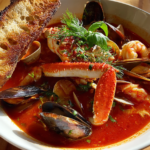
Classic Cioppino: The Ultimate San Francisco Fisherman’s Stew
- Total Time: 1 hour 15 minutes
- Yield: 6 Servings 1x
Description
A hearty San Francisco-style seafood stew loaded with crab, clams, mussels, shrimp, and fish in a rich, alcohol-free tomato and fennel broth.
Ingredients
- 3 tbsp Olive oil
- 1 large Onion (chopped)
- 1 Fennel bulb (sliced)
- 4 cloves Garlic (minced)
- 1 can (28 oz) Crushed tomatoes
- 2 cups Clam juice or Seafood stock
- 1 tbsp Red wine vinegar
- 1 lb Firm white fish (Halibut/Cod)
- 1 lb Clams
- 1 lb Mussels
- 1 lb Large shrimp
- 1 lb Dungeness crab legs
Instructions
- Sauté onion and fennel in olive oil until soft (8-10 mins). Add garlic and red pepper flakes.
- Stir in tomato paste and cook for 2 mins.
- Add crushed tomatoes, diced tomatoes, clam juice, water, vinegar, and herbs. Simmer for 30 mins.
- Add clams and mussels; cover and cook 3-4 mins.
- Add fish and crab; cook 3 mins.
- Add shrimp; cook 2-3 mins until seafood is cooked and shells open.
- Discard unopened shells. Garnish with herbs and serve with bread.
Notes
- Seafood: Scrub clams and mussels thoroughly before cooking.
- Alcohol-Free: Vinegar and high-quality seafood stock replace the traditional wine.
- Serving: Essential to serve with crusty sourdough bread for dipping.
- Prep Time: 30 minutes
- Cook Time: 45 minutes
- Category: Stew
- Method: Simmering
- Cuisine: Italian-American
Nutrition
- Serving Size: 1 Bowl
- Calories: 350 kcal
- Sugar: 8g
- Sodium: 980mg
- Fat: 12g
- Saturated Fat: 2g
- Unsaturated Fat: 8g
- Trans Fat: 0g
- Carbohydrates: 18g
- Fiber: 4g
- Protein: 42g
- Cholesterol: 185mg
Keywords: Classic Cioppino Recipe, Fisherman’s Stew, San Francisco Seafood Stew, Alcohol Free Cioppino, Christmas Eve Seafood, Healthy Seafood Soup