Chicken Piccata: The Bright, Zesty Italian Classic You Need Tonight
There are some days when you want a meal that is deep, dark, and slow-cooked. And then there are days when you want something that tastes like sunshine. You want something bright, something snappy, something that wakes up your palate and makes you feel alive.
For those days, there is only one answer: Chicken Piccata.
Welcome back to Recipes Nora! Today, we are mastering one of the most beloved dishes in the Italian-American canon.
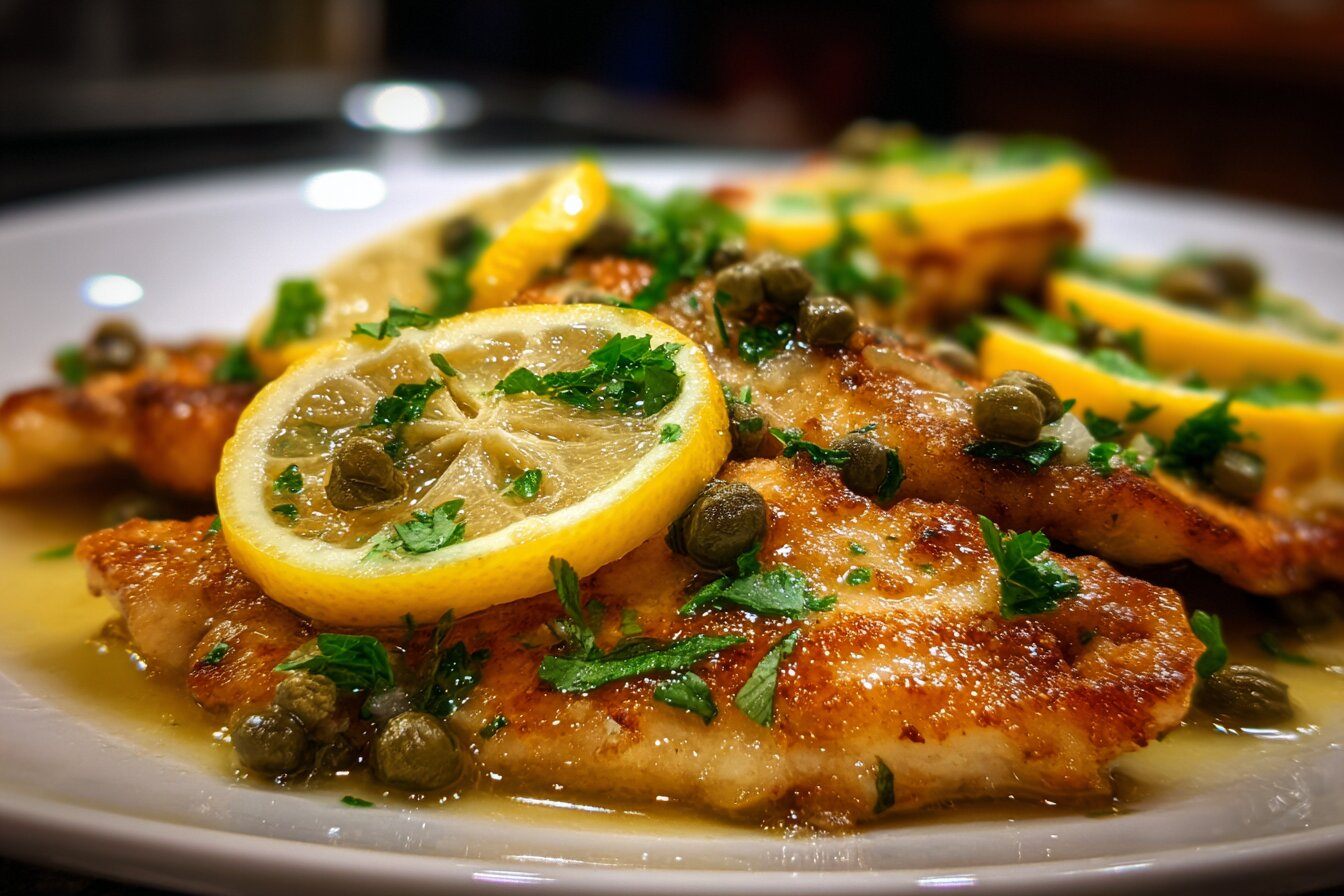
If you aren’t familiar with it, Chicken Piccata is a masterpiece of simplicity. It features thin, tender cutlets of chicken breast, lightly dusted in flour and pan-seared until golden. But the real star is the sauce: a glossy, silky emulsion of melted butter, fresh lemon juice, and salty, briny capers.
It is savory, it is tart, and it is incredibly satisfying.
One of the reasons I love this recipe so much is its elegance. It looks beautiful on the plate—the golden chicken contrasting with the green parsley and the vibrant yellow lemons. It looks like you spent hours in the kitchen, yet it comes together in about 20 minutes. It is the perfect “fake it ’til you make it” dinner for impressing guests or just treating yourself on a Tuesday.
In this deep-dive guide, I am going to teach you how to butterfly a chicken breast (so it cooks evenly), how to create a pan sauce that is thick and glossy without being gloopy, and why you definitely shouldn’t skip the capers.
Let’s get cooking!
What is Chicken Piccata?
The term “Piccata” actually comes from the Italian word piccato, which roughly translates to “larded” or “pounded flat.”
In Italy, this dish was traditionally made with veal (Veal Piccata). It was a way to make a tough cut of meat tender (by pounding it) and to stretch a small amount of meat into a flavorful meal (by adding a rich sauce). When Italian immigrants brought the technique to America, chicken was more affordable and available than veal, and thus, Chicken Piccata became a staple.
The flavor profile is distinct. Unlike heavier Italian dishes loaded with tomato sauce and mozzarella (like Parmigiana), Piccata is all about Acidity and Fat. The tartness of the lemon cuts through the richness of the butter and the fried coating of the chicken. It’s a balancing act that, when done right, is absolute perfection.
Why This Recipe Works
As a chef, I am obsessed with “pan sauces.” This recipe is the ultimate lesson in pan sauce physics.
- The Dredge: We coat the chicken in flour before searing. This does two things. First, it creates a golden crust that protects the meat from drying out. Second, and more importantly, a little bit of that flour sticks to the bottom of the pan (the fond). When we add our liquid later, that leftover flour helps thicken the sauce naturally.
- The Deglaze: After cooking the chicken, the pan is full of caramelized brown bits. By adding chicken broth and lemon juice, we lift those flavor bombs off the metal and dissolve them into the liquid. This gives the sauce a savory depth that you can’t get from a bouillon cube.
- The Emulsion: The final step involves swirling cold butter into the hot sauce. This creates an emulsion—a mixture of fat and liquid that doesn’t separate. It gives the sauce a velvety mouthfeel that coats the back of a spoon.
- The Brine: Capers are the secret weapon. They are actually flower buds from a bush native to the Mediterranean, pickled in salt or vinegar. They provide tiny explosions of salty, floral flavor that season the sauce from the inside out.
Ingredient Deep Dive: The Fresh Factor
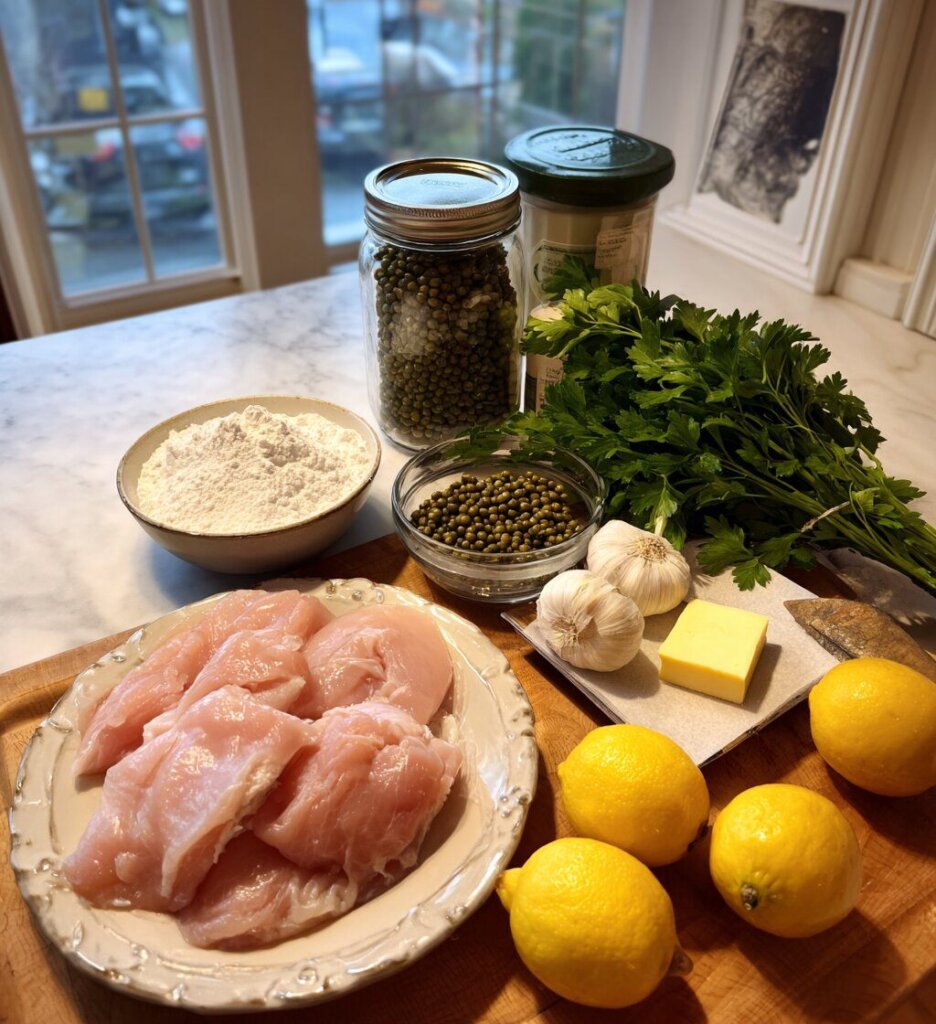
Since this recipe relies on so few ingredients, there is nowhere to hide. Freshness is paramount.
The Chicken
- Boneless Skinless Breasts: This is the standard. However, a whole chicken breast is too thick. You must slice it horizontally (butterfly) or pound it thin.
- The Thickness: Aim for 1/4 inch thickness. If the chicken is too thick, the outside will burn before the inside cooks, or the sauce will reduce too much while you wait for the meat to finish. Uniformity is key.
The Lemon
- Fresh Only: Please, I beg you, do not use the plastic lemon-shaped bottle of juice. It contains preservatives that taste metallic. You need fresh lemons for both the juice and the slices. The essential oils in the fresh zest add a floral aroma that bottled juice lacks.
The Capers
- Jarred Capers: You can find these near the pickles or olives in the grocery store.
- To Rinse or Not? I recommend giving them a quick rinse. The brine they sit in can be very vinegary and salty. Rinsing them lets the natural floral flavor of the caper shine through.
The Liquid Base
- Chicken Broth: Use a high-quality, low-sodium chicken broth. Because we are reducing the sauce (boiling off water), the salt concentrates. If you start with salty broth, the final dish will be a salt lick.
- No Wine Needed: Many traditional recipes call for white wine. In my kitchen, we skip the alcohol and use extra chicken broth mixed with a teaspoon of white vinegar or just extra lemon juice. Trust me, with the brightness of the lemon, you won’t miss the wine at all.
The Fat
- Olive Oil & Butter: We use a mix. Olive oil has a higher smoke point for searing the chicken. Butter is added at the end for flavor and texture.
Step-by-Step Instructions
This recipe moves fast. Once the chicken hits the pan, you are about 10 minutes from dinner. Have everything chopped and measured before you turn on the stove (Mise en Place).
Step 1: Prep the Chicken
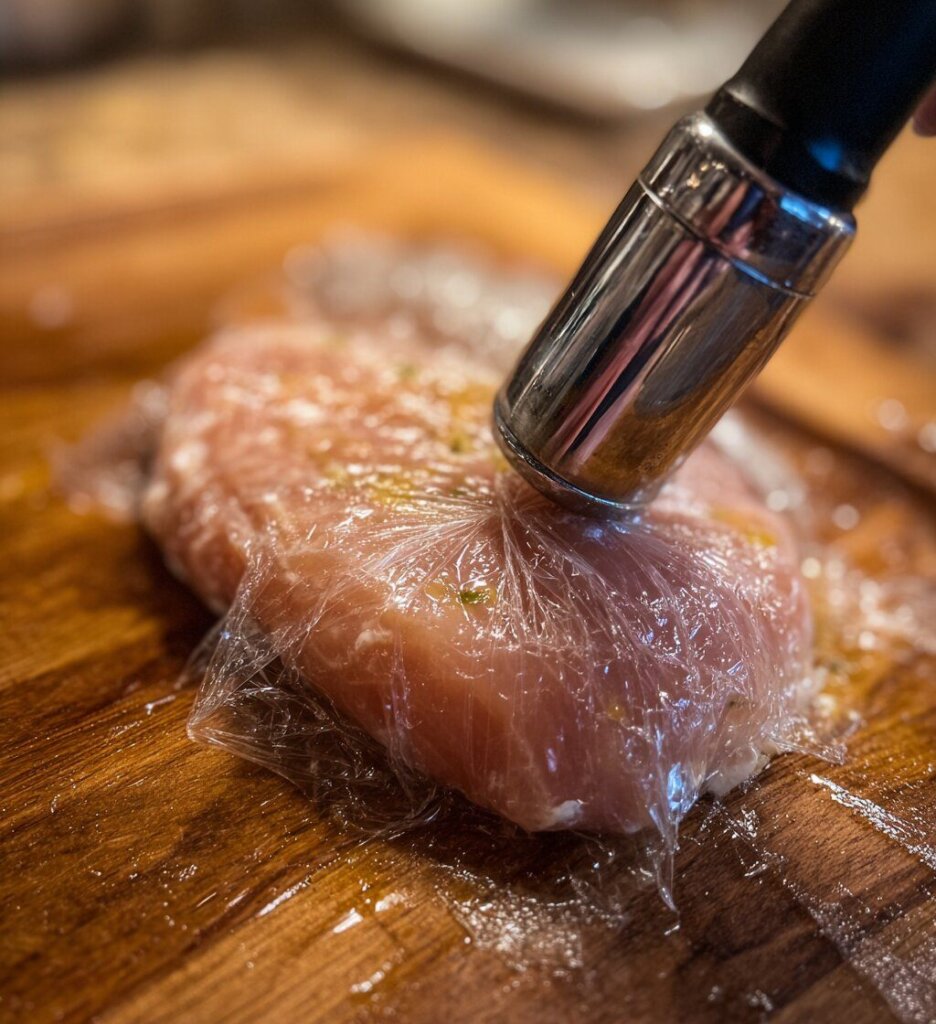
Place your chicken breast on a cutting board. Place your hand flat on top of it. carefully slice horizontally through the middle to create two thin cutlets. Place the cutlets between two sheets of plastic wrap. Using a meat mallet or a heavy rolling pin, pound them gently until they are an even 1/4-inch thickness. Pat the chicken dry with paper towels. Season generously with salt and black pepper.
Step 2: The Dredge
Place the flour in a shallow dish (like a pie plate). Dredge each piece of chicken in the flour, shaking off the excess. You want a fine dusting, not a thick batter.
- Chef Noah’s Tip: Don’t dredge the chicken until the oil is hot! If you flour it and let it sit for 20 minutes, the flour will get gummy and won’t crisp up.
Step 3: The Sear
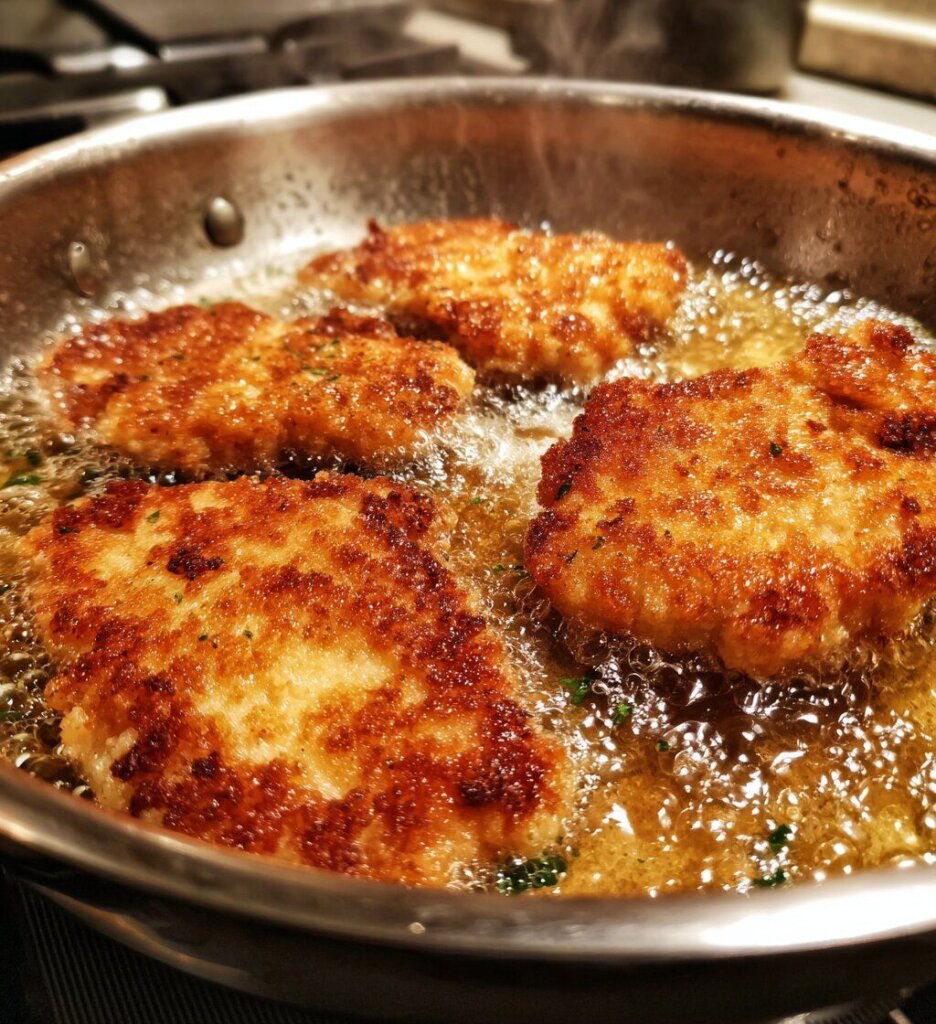
Heat the olive oil and 1 tablespoon of butter in a large skillet over medium-high heat. When the butter foams and subsides, add the chicken. Do not crowd the pan—cook in batches if needed. Cook for 3 to 4 minutes per side. You are looking for a deep golden-brown color. Remove the chicken to a warm plate and set aside.
Step 4: The Sauce Construction
Reduce the heat to medium. Add the minced garlic to the pan and cook for 30 seconds until fragrant. Do not burn it. Pour in the chicken broth and lemon juice. Use a wooden spoon to scrape up the brown bits from the bottom of the pan (deglazing). Let the liquid simmer vigorously for 3 to 5 minutes. It should reduce by about half.
Step 5: The Finish
Stir in the capers. Turn the heat down to low. Add the remaining 2 tablespoons of butter. Stir constantly until the butter melts and the sauce looks glossy and slightly thickened. Taste the sauce! Does it need more lemon? More salt? Adjust now.
Step 6: Serve
Return the chicken to the pan just to warm it through and coat it in the sauce (about 1 minute). Garnish with fresh parsley and lemon slices. Serve immediately.
Chef Noah’s Tips for Success
1. The “Soggy” Prevention Chicken Piccata is best eaten immediately. If you let the chicken sit in the sauce for 30 minutes, the crispy flour coating will absorb the liquid and turn soggy. If you are making this ahead of time, keep the sauce and chicken separate until the very last second.
2. Managing Salt Capers are salty. Butter is salted (usually). Broth has salt. Be careful when seasoning. I salt the chicken well, but I rarely add extra salt to the sauce itself until the very end after I have tasted it.
3. Thickening Hacks If your sauce looks too thin and watery after adding the butter, you can use a “Beurre Manié.” Mash 1 teaspoon of soft butter with 1 teaspoon of flour and whisk it into the simmering sauce. It will thicken instantly without clumping.
4. Garlic Nuance Garlic isn’t strictly traditional in the oldest Italian recipes, but I find it essential. If you want a milder flavor, smash the garlic cloves whole, sauté them in the oil to infuse flavor, and then remove them before adding the chicken.
Variations and Dietary Swaps
This recipe is versatile. Here is how to tweak it to your needs:
- Gluten-Free: Swap the All-Purpose flour for a 1:1 Gluten-Free flour blend or cornstarch. If using cornstarch, dust very lightly, as it browns faster than flour.
- Creamy Piccata: If you want a richer, heavier sauce, stir in 1/4 cup of heavy cream at the same time you add the broth. This makes a sauce that is excellent over pasta.
- Fish Piccata: This exact sauce is incredible on white fish like Cod, Tilapia, or Sole. Just reduce the cooking time, as fish cooks faster than chicken.
- Vegetarian: Use thick slices of Cauliflower “steaks” or firm Tofu instead of chicken.
What to Serve with Chicken Piccata
You have a tart, salty, rich sauce. You need a side dish that can soak it up or balance it out.
- Angel Hair Pasta: This is the classic pairing. The thin noodles coat well in the lemon butter sauce. Toss the pasta with a little olive oil and parsley before serving.
- Mashed Potatoes: Lemon and potatoes are an underrated combination. The creaminess of the mash works perfectly with the sharp sauce.
- Roasted Asparagus: The earthiness of asparagus pairs beautifully with lemon.
- Rice Pilaf: A simple garlic butter rice is a great vehicle for the extra sauce.
- Crusty Bread: Essential for “scarpetta” (the Italian act of mopping up the sauce with bread).
Storage and Reheating
Piccata is a quick-cook meal, so leftovers are rare, but here is how to handle them.
- Fridge: Store in an airtight container for up to 3 days.
- Freezing: I do not recommend freezing this dish. The butter emulsion in the sauce will break when thawed, and the texture will be oily.
- Reheating:
- Stove: Place chicken and sauce in a pan over low heat. Add a splash of water or broth. Cover and heat gently.
- Microwave: Heat in 1-minute intervals. Be careful not to overheat, or the chicken will become rubbery.
Final Thoughts
Chicken Piccata is the culinary equivalent of a ray of sunshine. It is proof that you don’t need heavy creams or hours of simmering to create a meal that feels luxurious.
It balances the savory notes of seared poultry with the bright, acidic punch of lemon and the briny pop of capers. It’s a dish that wakes up your senses.
Whether you are cooking for a date night or just want to treat yourself to something that tastes like a restaurant meal, this recipe is your new best friend.
So, grab those lemons and let’s get zesty.
Happy Cooking! Chef Noah
Print
Chicken Piccata: The Bright, Zesty Italian Classic You Need Tonight
- Total Time: 30 minutes
- Yield: 4 Servings 1x
- Diet: Halal
Description
A classic Italian-American dish featuring tender pan-fried chicken breast in a zesty lemon, butter, and caper sauce. Ready in 30 minutes.
Ingredients
- 2 Chicken Breasts (halved)
- 1/2 cup Flour
- 1 cup Chicken Broth
- 1/4 cup Lemon Juice
- 2 tbsp Capers
- 3 tbsp Butter
- 3 cloves Garlic
Instructions
- Pound chicken thin and dredge in seasoned flour.
- Sear chicken in oil and butter until golden; remove.
- Sauté garlic, then deglaze pan with broth and lemon juice.
- Simmer to reduce. Whisk in butter and capers.
- Return chicken to sauce and serve.
Notes
- Alcohol-Free: This recipe uses extra chicken broth and lemon instead of white wine for a Halal-friendly version.
- Capers: Rinse capers to remove excess saltiness.
- Serving: Best served immediately over pasta or mashed potatoes.
- Prep Time: 15 minutes
- Cook Time: 15 minutes
- Category: Dinner
- Method: Pan Fry
- Cuisine: Italian-American
Nutrition
- Serving Size: 1 Cutlet with Sauce
- Calories: 320 kcal
- Sugar: 1g
- Sodium: 680mg
- Fat: 18g
- Saturated Fat: 6g
- Unsaturated Fat: 10g
- Trans Fat: 0g
- Carbohydrates: 12g
- Fiber: 1g
- Protein: 28g
- Cholesterol: 85mg
Keywords: Chicken Piccata Recipe, Lemon Chicken with Capers, Easy Chicken Dinner, 30 Minute Meal, Alcohol Free Chicken Piccata, Pan Fried Chicken