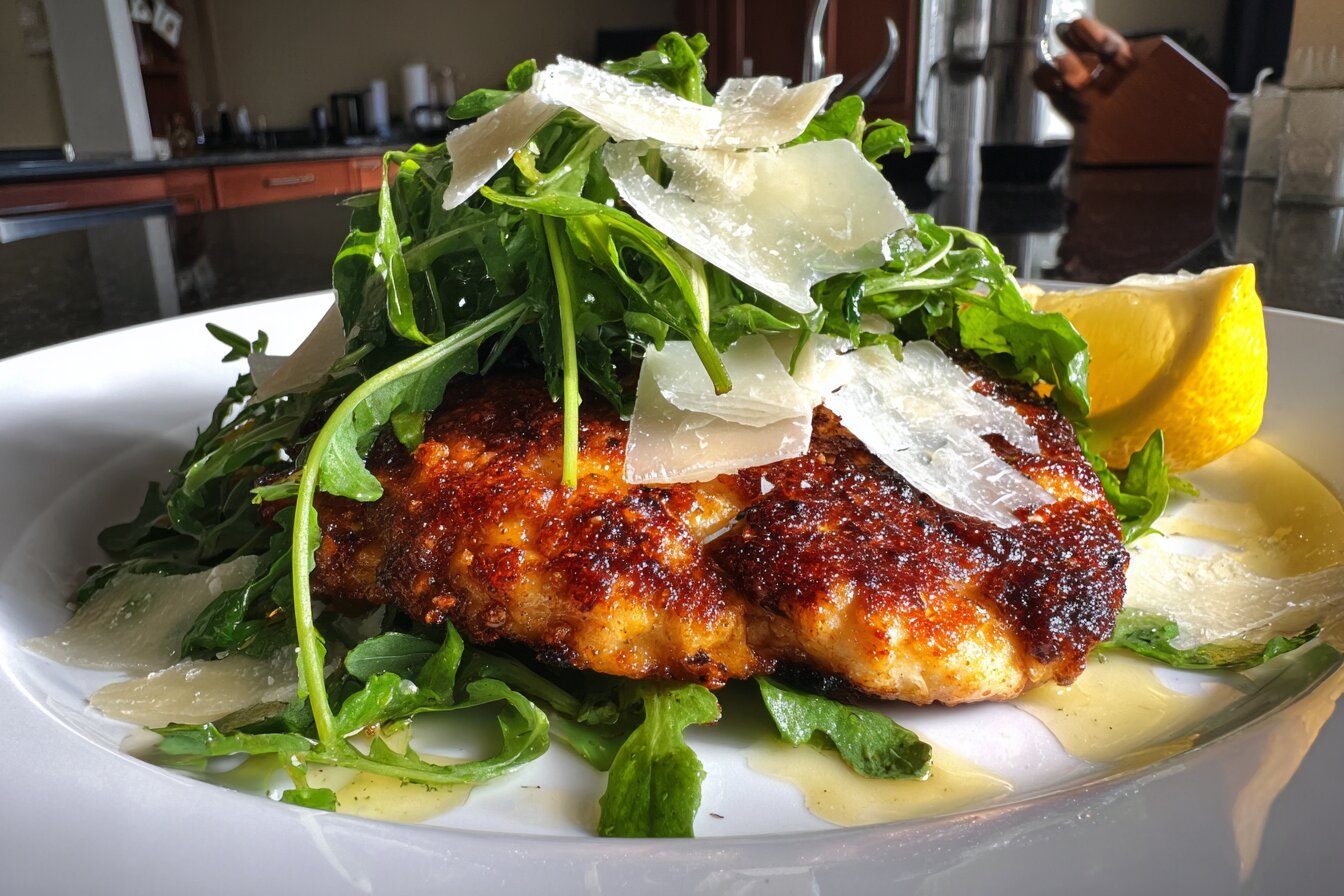
Chicken Paillard: The 15-Minute French Bistro Dinner You Need to Master
There is a misconception in home cooking that “elegant” means “complicated.” We often assume that if a dish looks beautiful—like something you would be served on a white tablecloth in Paris—it must require hours of prep, a dozen pans, and a culinary degree to execute.
I am here to tell you that is nonsense.
Some of the most sophisticated dishes in the world are born from simplicity and speed. Today, we are mastering one of the absolute best: Chicken Paillard.
Welcome back to Recipes Nora! Today, we are putting away the slow cooker and turning up the heat.
If you have never had Chicken Paillard, you are in for a revelation. It features a chicken breast pounded until it is impossibly thin, seared hard and fast until golden and crispy, and then topped with a bright, peppery arugula salad dressed in lemon and parmesan.
It is a study in contrasts. You have the hot, savory, juicy chicken against the cold, crisp, acidic salad. You have the rich olive oil against the sharp lemon juice. It is light enough for a summer lunch but satisfying enough for a winter dinner date.
And the best part? From the moment you take the chicken out of the fridge to the moment you are eating, it takes about 15 minutes.
In this deep-dive guide, I will teach you the proper technique for pounding chicken (without tearing it to shreds), why “paillard” is different from “schnitzel,” and how to make a simple lemon vinaigrette that tastes better than anything in a bottle.
Let’s get pounding!
What is Chicken Paillard?
The word paillard (pronounced pie-YAR) is a French culinary term referring to a piece of meat—usually veal or chicken—that has been pounded thin and grilled or sautéed quickly.
It is named after a 19th-century restaurant owner in Paris, Paillard, who popularized the technique.
Unlike a Chicken Milanese or Schnitzel, which are pounded thin, breaded, and fried, a Paillard is typically cooked “naked.” There is no heavy breading to hide behind. It relies entirely on the quality of the sear and the freshness of the toppings.
Because the meat is so thin (usually about 1/4 inch thick), it cooks in roughly two minutes per side. This speed is crucial. It means the exterior gets a beautiful Maillard reaction (browning) before the interior has a chance to dry out. The result is arguably the tenderest piece of chicken you will ever eat.
Why This Recipe Works
As a chef, I love this recipe because it fixes the biggest problem people have with chicken breasts: dryness.
- Mechanical Tenderization: By physically pounding the meat with a mallet or rolling pin, you are breaking down the connective tissues and muscle fibers. You are doing the work that slow-cooking usually does, but in reverse. This ensures that even a lean breast remains tender.
- Even Cooking: A natural chicken breast is tear-shaped—thick on one end, thin on the other. By the time the thick end is cooked, the thin end is leather. By pounding it to a uniform thickness, the entire piece cooks at the exact same rate.
- The “Hot & Cold” Dynamic: The magic of this dish lies in plating. When you pile the cold, lemony salad onto the hot chicken, the heat from the meat slightly wilts the greens and releases the aroma of the parmesan cheese. It creates a unified flavor profile where the salad becomes the sauce.
- Dietary Friendly: It is naturally low-carb, gluten-free, and high-protein, yet it doesn’t feel like “diet food.” It feels like indulgence.
Ingredient Deep Dive: Simplicity is Key
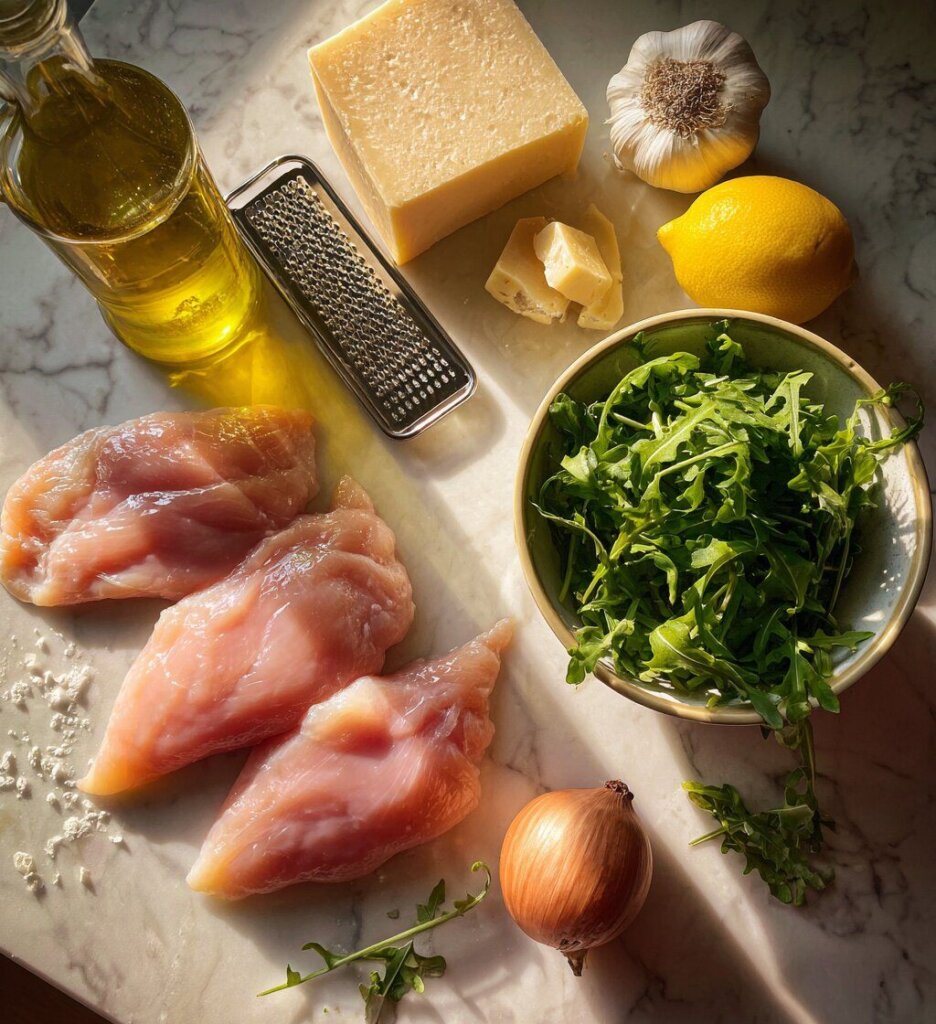
Because there are so few ingredients, there is nowhere to hide. Quality matters here.
The Chicken
- Boneless Skinless Breasts: Look for air-chilled chicken if possible. It has less water content, which means it will sear better instead of steaming in the pan.
- Size: Smaller breasts (6-8 oz) are easier to manage. If you have massive breasts, slice them in half horizontally (butterfly) before pounding.
The Greens
- Arugula (Rocket): This is the traditional pairing. Arugula has a natural peppery, spicy bite that cuts through the richness of the olive oil.
- Substitutions: If you find arugula too bitter, a mix of baby spinach and watercress works beautifully. You need tender greens; iceberg or romaine are too crunchy and watery for this.
The Vinaigrette
- Fresh Lemon Juice: Do not use the bottled stuff. You need the volatile oils from fresh zest and the sharp acidity of fresh juice.
- Shallot: I prefer shallots over onions here. They are milder and sweeter. Mincing them finely allows them to essentially melt into the dressing.
- Olive Oil: Use your “good” Extra Virgin Olive Oil for the salad. You want those grassy, fruity notes.
The Cheese
- Parmesan or Pecorino: Shaved, not grated. Use a vegetable peeler to shave large, thin ribbons of cheese off the block. These large surface areas hit your tongue and provide a salty, umami punch that powdered cheese can’t replicate.
The Art of the Pound: Techniques and Tools
Many home cooks are intimidated by pounding meat, fearing they will tear holes in it or make a mess. Here is how to do it like a pro.
The Setup
You need a sturdy surface. Do not do this on a wobbly table. Lay down a large piece of plastic wrap or a split-open ziplock bag. Place the chicken in the center. Cover with another piece of plastic wrap.
- Why Plastic? This prevents raw chicken juices from splattering all over your kitchen (salmonella is not a good seasoning) and protects the delicate meat from the direct impact of the mallet.
The Tool
- Meat Mallet: Use the flat side, not the spiky side. The spiky side is for cubing steak; it will tear chicken breast to shreds.
- Rolling Pin or Pan: If you don’t have a mallet, a heavy rolling pin or the bottom of a heavy saucepan works perfectly.
The Motion
Start from the center of the breast and strike outward toward the edges. Don’t just hammer it straight down. Think of it as a “slide and hit” motion. You are pushing the meat to expand it. Aim for a uniform thickness of about 1/4 inch. If it’s too thin, it will turn into jerky. If it’s too thick, it won’t cook fast enough.
Step-by-Step Instructions
This recipe moves at lightning speed once the heat is on.
Step 1: Prep the Salad Base
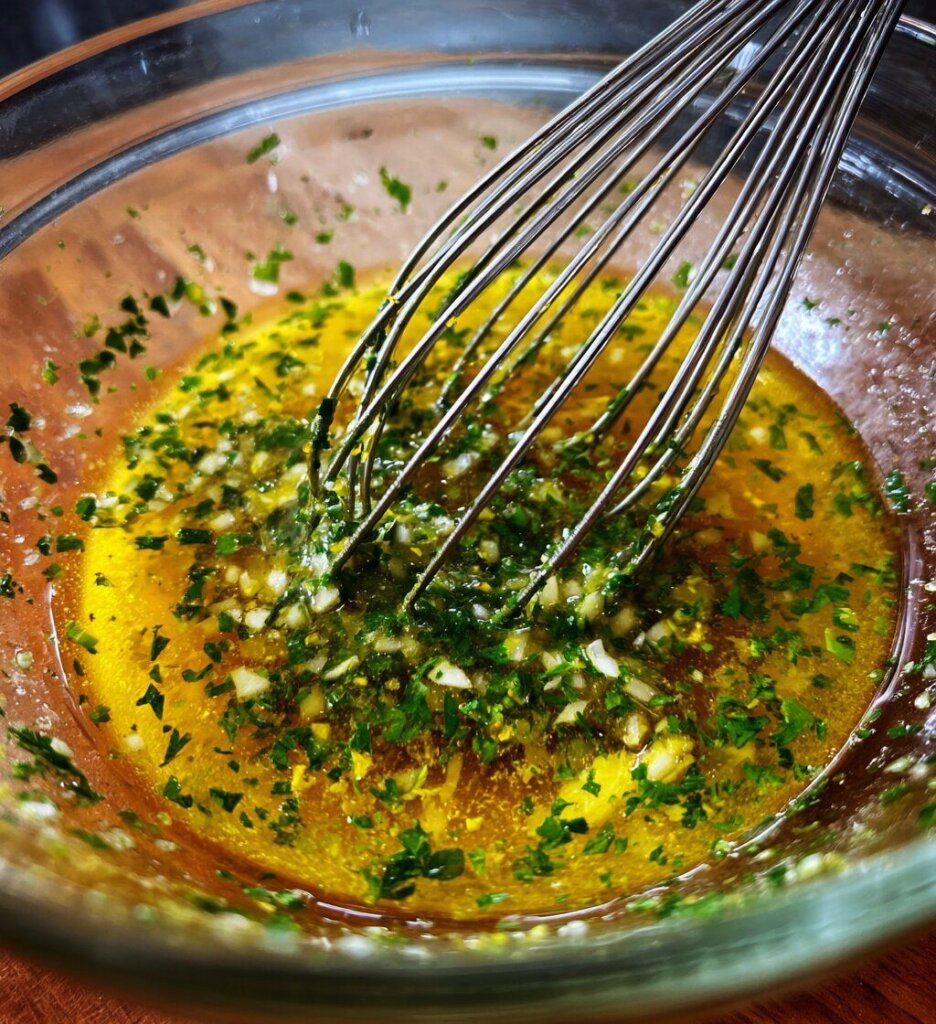
In a large bowl, whisk together the minced shallot, fresh lemon juice, lemon zest, salt, and pepper. Let this sit for 5 minutes.
- Chef Noah’s Tip: Letting the shallot sit in the acid (macerating) removes the raw, stinging “onion breath” flavor and mellows it out. Whisk in the Extra Virgin Olive Oil until emulsified. Taste it. It should be quite tart. Do not toss the greens yet. If you dress the salad now, it will be soggy by the time the chicken is cooked.
Step 2: Pound the Chicken
Set up your station with plastic wrap as described above. Pound the chicken breasts to 1/4 inch thickness. Pat the chicken extremely dry with paper towels. Season generously on both sides with salt and black pepper.
Step 3: The Sear
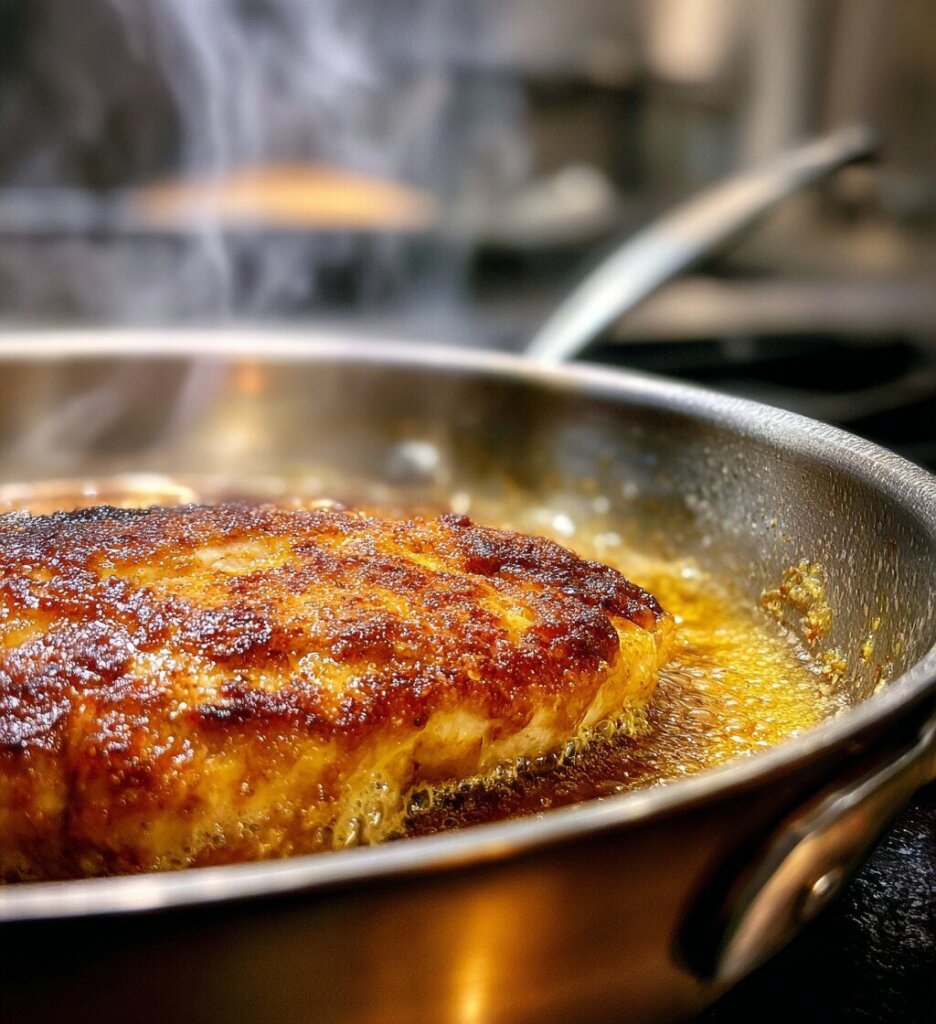
Heat a large skillet (cast iron or stainless steel is best) over medium-high heat. Add a splash of cooking oil (vegetable or light olive oil—save the EVOO for the salad). When the oil is shimmering and just starting to smoke, lay the chicken into the pan. Lay it away from you to avoid splashing oil. Don’t touch it. Let it sear undisturbed for 2 to 3 minutes. You want a deep golden brown crust. Flip the chicken. It should look like a golden landscape. Cook on the second side for another 1 to 2 minutes. Remove from the pan and transfer to a serving plate.
Step 4: Assemble
While the chicken rests for a minute, toss the arugula and shaved parmesan into the bowl with the vinaigrette. Toss gently with your hands to coat every leaf. Grab a massive handful of the salad and pile it directly on top of the hot chicken. Finish with a drizzle of olive oil and an extra crack of black pepper.
Chef Noah’s Tips for Success
1. Don’t Crowd the Pan Paillards are wide. They take up a lot of real estate. Unless you have a giant griddle, you will likely need to cook them one at a time or in two pans. If you overlap them, they will steam, and you will lose that delicious crust.
2. The Resting Period Even though it’s thin, the chicken still needs 2 minutes to rest. This allows the juices to redistribute. Conveniently, this is exactly how long it takes to dress the salad.
3. Seasoning the Salad Greens need salt too! Don’t rely on the dressing alone. A tiny pinch of flaky sea salt on the greens right before serving makes the flavors pop.
4. Infused Oils If you want to get fancy, you can brush the chicken with garlic-infused oil or rosemary oil right after it comes out of the pan for an extra layer of aroma.
Variations and Dietary Swaps
This is a versatile canvas. Here are a few ways to switch it up:
- Chicken Paillard “Caprese”: Instead of arugula, top the hot chicken with diced tomatoes, fresh mozzarella pearls, basil, and a balsamic glaze drizzle.
- The “Winter” Version: Use warm toppings. Sauté spinach and garlic quickly in the chicken pan after removing the meat, and serve that on top instead of cold salad.
- Herbed Paillard: Mix chopped fresh thyme, rosemary, and sage into the olive oil and rub it onto the raw chicken before searing.
- Turkey Paillard: This technique works perfectly with turkey cutlets.
What to Serve with Chicken Paillard
While the chicken and salad are a complete meal on their own, sometimes you need a little more substance.
- Roasted Potatoes: Crispy fingerling potatoes or rosemary roasted potatoes are the classic bistro side.
- French Fries: Steak frites style. The salty fries go great with the lemon dressing.
- Crusty Bread: A baguette is essential for mopping up the mix of chicken juices and vinaigrette left on the plate.
- Grilled Asparagus: If you want to keep it green and healthy.
Storage and Reheating
This is one of the few recipes I will tell you is not great for meal prep in its assembled form. Once the salad hits the hot chicken, it wilts.
- Fridge: You can store the cooked chicken and the undressed salad separately for up to 3 days.
- Reheating: Reheat the chicken in a hot pan for 30 seconds per side just to warm it through. Do not microwave it, or it will become rubbery.
- Freezing: You can pound and freeze the raw chicken breasts! Separate them with parchment paper so they don’t stick. Thaw them in the fridge, and dinner is ready in 5 minutes.
Final Thoughts
Chicken Paillard is the ultimate “back pocket” recipe. It is the meal you make when you get home late, you are starving, and you want something that tastes like effort but requires none.
It celebrates the simple joy of good ingredients: meat, fire, lemon, oil, and greens. There is no heavy sauce to mask mistakes, just pure, clean flavor.
So, grab your mallet, take out some frustration on that chicken, and enjoy a taste of Paris in your own kitchen.
Happy Cooking! Chef Noah
Print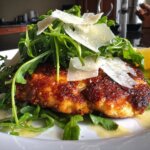
Chicken Paillard: The 15-Minute French Bistro Dinner You Need to Master
- Total Time: 16 minutes
- Yield: 2 Servings 1x
- Diet: Gluten Free
Description
A classic French bistro dish ready in 15 minutes. Thinly pounded chicken breast seared to perfection and topped with a fresh lemon arugula salad.
Ingredients
- 2 Chicken Breasts
- 4 cups Arugula
- 1/3 cup Shaved Parmesan
- 1 Shallot
- 1 Lemon (Juice & Zest)
- 3 tbsp Olive Oil
Instructions
- Whisk shallot, lemon juice, and olive oil to make the vinaigrette.
- Pound chicken breasts between plastic wrap until 1/4 inch thick.
- Sear chicken in a hot skillet for 2-3 minutes per side until golden.
- Toss arugula and parmesan with the vinaigrette.
- Serve salad piled on top of the hot chicken.
Notes
- Technique: Pounding the chicken ensures it cooks evenly and stays tender.
- Timing: Dress the salad right before serving to keep the greens crisp.
- Variations: Add cherry tomatoes or swap arugula for spinach.
- Prep Time: 10 minutes
- Cook Time: 6 minutes
- Category: Dinner
- Method: Pan Sear
- Cuisine: French
Nutrition
- Serving Size: 1 Serving
- Calories: 350 kcal
- Sugar: 1g
- Sodium: 450mg
- Fat: 22g
- Saturated Fat: 5g
- Unsaturated Fat: 15g
- Trans Fat: 0g
- Carbohydrates: 4g
- Fiber: 1g
- Protein: 38g
- Cholesterol: 95mg
Keywords: Chicken Paillard Recipe, Grilled Chicken Arugula Salad, French Bistro Chicken, Healthy Chicken Dinner, Keto Chicken Recipe, 15 Minute Meal