Birria Ramen: The Ultimate Mexican-Japanese Fusion Comfort Food
Every once in a while, two culinary worlds collide in a way that feels like destiny. We have seen it with Sushi Burritos and Kimchi Tacos, but nothing—and I mean nothing—hits the soul quite like Birria Ramen.
Welcome back to Recipes Nora! Today, we are tackling a dish that has taken the street food scene in Los Angeles and Mexico City by storm. We are taking the deep, complex, spiced beef stew of Jalisco, Mexico (Birria), and marrying it with the chewy noodles and slurping comfort of Japanese Ramen.
If you have ever had Birria Tacos, you know that the magic lies in the consomé—that rich, red, flavorful broth that you dip the tacos into. It is savory, slightly spicy, and packed with beefy goodness. Someone, somewhere, had the brilliant idea: “This broth is too good just for dipping. Why don’t we put noodles in it?”
And thus, a legend was born.
In this guide, I am going to teach you how to make authentic Beef Birria from scratch (no shortcuts here, we need that collagen breakdown!), how to transform the stew into a slurp-able ramen broth, and the exact toppings you need to balance the richness.
This is a weekend project. It takes a few hours to braise the meat until it falls apart. But when you lift that first tangle of noodles dripping with red chile broth and tender beef, you will realize it was worth every single minute.
Let’s get braising!
What is Birria Ramen?
To understand this dish, we have to break it down into its parents.
Birria is a traditional Mexican stew, originally made with goat, but now commonly made with beef (Birria de Res). The meat is marinated in a paste made from dried chiles (Guajillo, Ancho), spices (cumin, oregano, cloves), and vinegar, then slow-cooked until it shreds easily with a fork.
Ramen is a Japanese noodle soup dish characterized by a rich broth (like Tonkotsu or Shoyu), alkaline wheat noodles, and toppings like soft-boiled eggs and scallions.
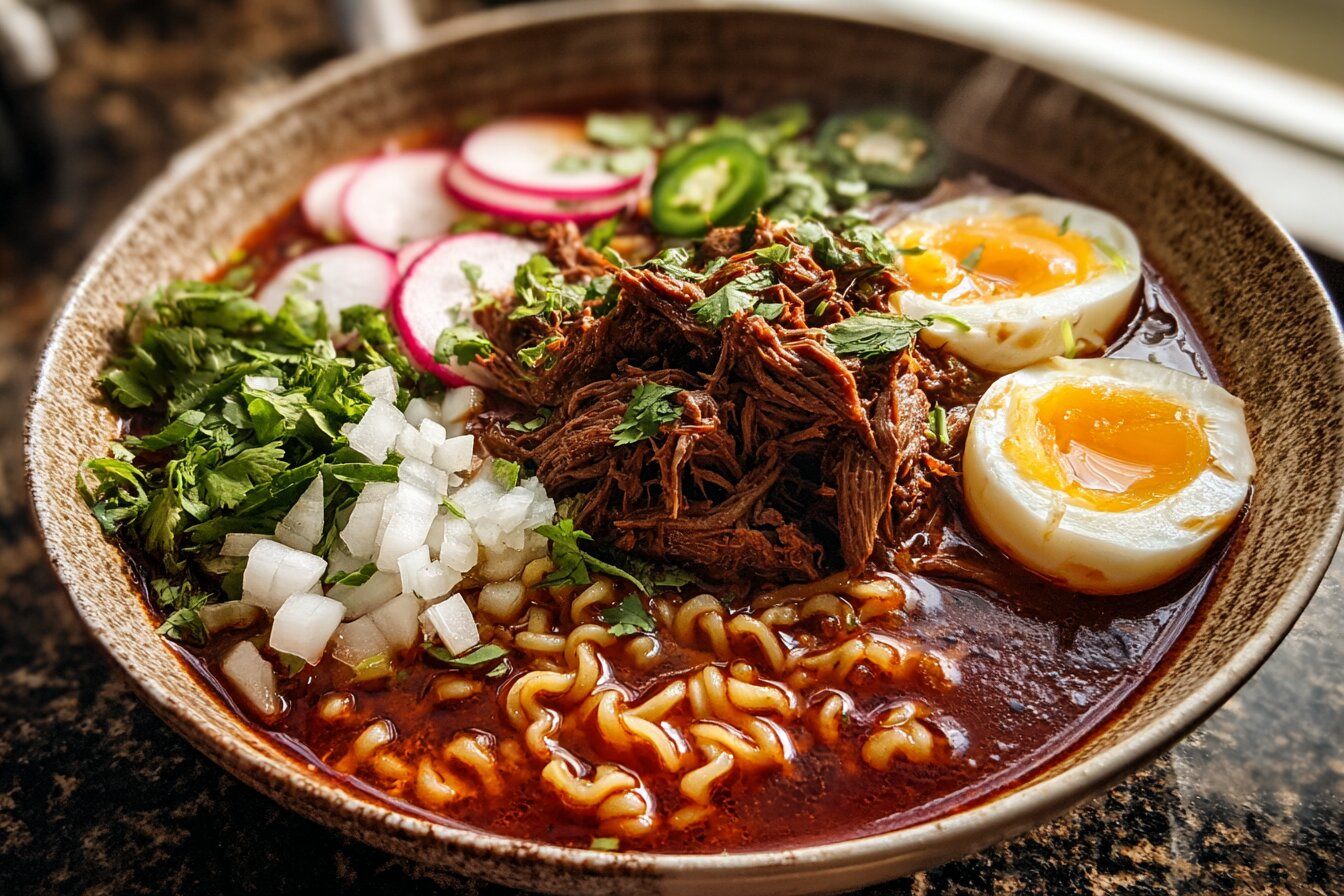
Birria Ramen swaps the traditional Japanese dashi or pork bone broth for the Birria consomé. The alkaline noodles hold up beautifully against the heavy, spiced broth, and the toppings are a mix of both cultures: cilantro and onion (Mexican) alongside soft-boiled eggs and nori (Japanese).
Why This Recipe Works
As a chef, I am obsessed with “Umami,” the fifth taste. This dish is an Umami bomb.
- The Chile Base: We use dried Guajillo and Ancho chiles. These aren’t just for heat; they provide a fruity, earthy depth that tastes almost like dried raisins or plums. When toasted and blended, they create a flavor foundation that is much more complex than just using chili powder.
- Collagen is King: We use cuts of beef like Chuck Roast and Short Ribs (or Shank). These cuts are tough and full of connective tissue. During the long simmer, that tissue breaks down into gelatin, giving the broth a silky, sticky mouthfeel that coats your lips.
- Acid Balance: Birria is rich. To cut through that beef fat, we use apple cider vinegar in the adobo sauce and serve the final dish with fresh lime juice. That hit of acid wakes up the palate and prevents the dish from feeling too heavy.
- Texture: The soft, shredded beef contrasts with the chewy “bouncy” texture of the ramen noodles and the crisp crunch of raw onions and radishes.
Ingredient Deep Dive: The Holy Trinity of Birria
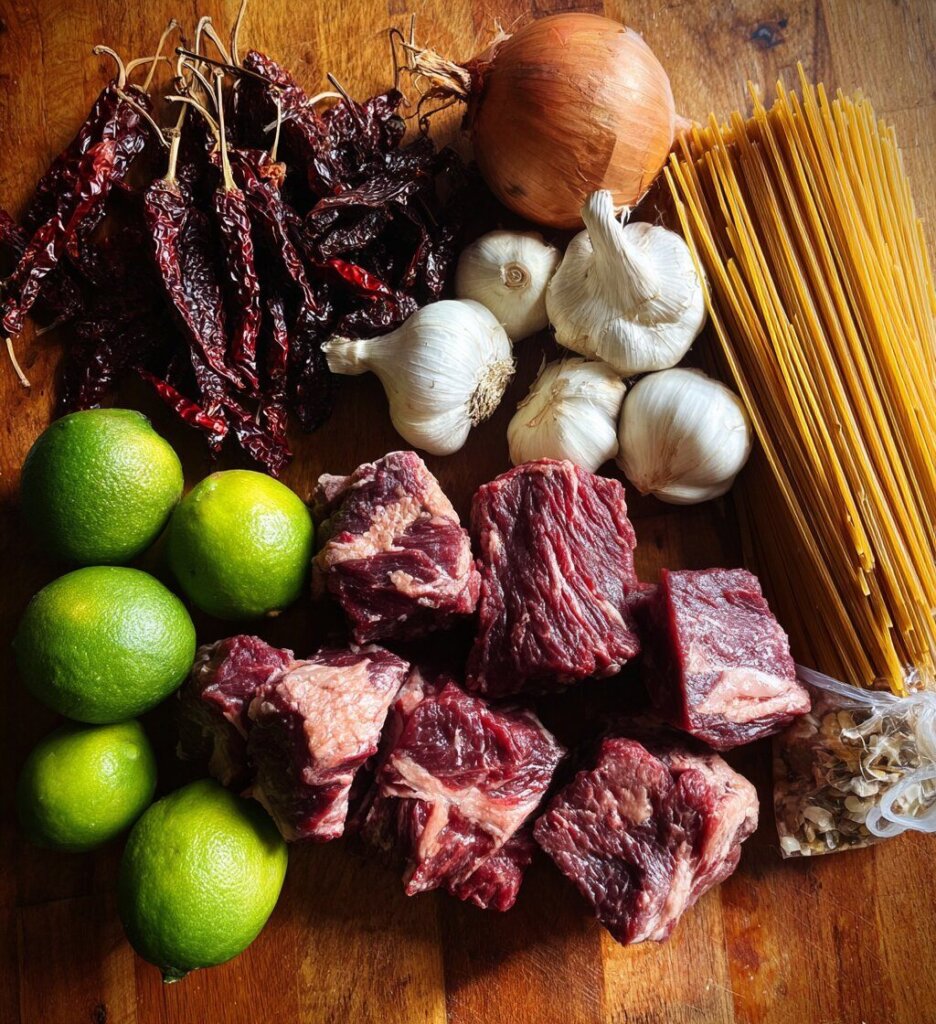
There are three components you cannot skimp on: The Meat, The Chiles, and The Noodles.
The Meat
- Chuck Roast: This is your workhorse. It has good marbling and shreds beautifully.
- Short Ribs or Shank: I highly recommend adding bone-in meat. The bones release marrow and gelatin into the broth, thickening it naturally. If you only use lean meat, your broth will be thin and watery.
The Chiles
Do not be intimidated by dried chiles! You can find them in the “International” aisle of most grocery stores.
- Guajillo: Bright red, smooth skin. They add a tangy, berry-like brightness and mild heat.
- Ancho: Dark, wrinkled skin (dried Poblano). They add deep, chocolaty, raisin-like notes.
- Chiles de Árbol: Tiny and spicy. Add 1 or 2 if you like heat, or skip them if you want it mild.
The Noodles
- Fresh Ramen: If you can find fresh ramen noodles in the refrigerated section (like Sun Noodle brand), buy them. They have the best texture.
- Dried Ramen: High-quality dried ramen works too.
- Instant Noodles: In a pinch, you can use the brick of noodles from a generic ramen pack (throw away the flavor packet!). They are fried, so they add a different texture, but they soak up the broth nicely.
Step-by-Step Instructions
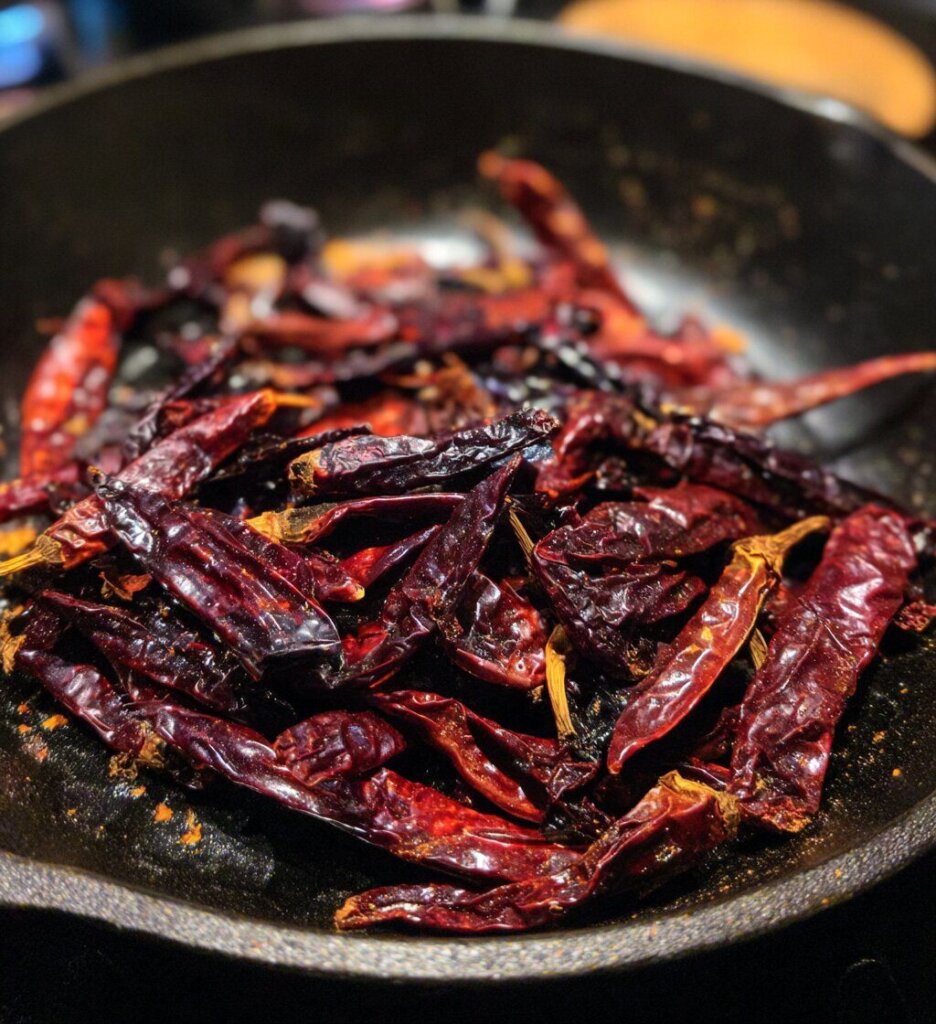
This process has two main phases: making the Birria (the stew), and then assembling the Ramen.
Phase 1: The Adobo (Flavor Base)
First, we need to prep the chiles. Remove the stems and seeds from the dried chiles. Toast them in a dry skillet for 1-2 minutes until fragrant. Do not burn them, or they will turn bitter! Soak the toasted chiles in hot water for 15 minutes to soften. Blend the softened chiles with roasted tomatoes, onion, garlic, spices (oregano, cumin, cinnamon, cloves, ginger), and apple cider vinegar until you have a smooth, red paste. This is your “Adobo.”
Phase 2: The Braise
Cut your beef into large chunks. Season generously with salt and pepper. Sear the beef in a large heavy pot (Dutch oven) until browned on all sides. Remove the beef. In the same pot, fry your Adobo paste for 5 minutes. This “cooking out” of the sauce deepens the flavor. Add the beef back in along with beef broth and water. Simmer covered for 3 to 4 hours (or use a pressure cooker for 50 minutes) until the meat is falling apart.
Phase 3: The Shred and Strain
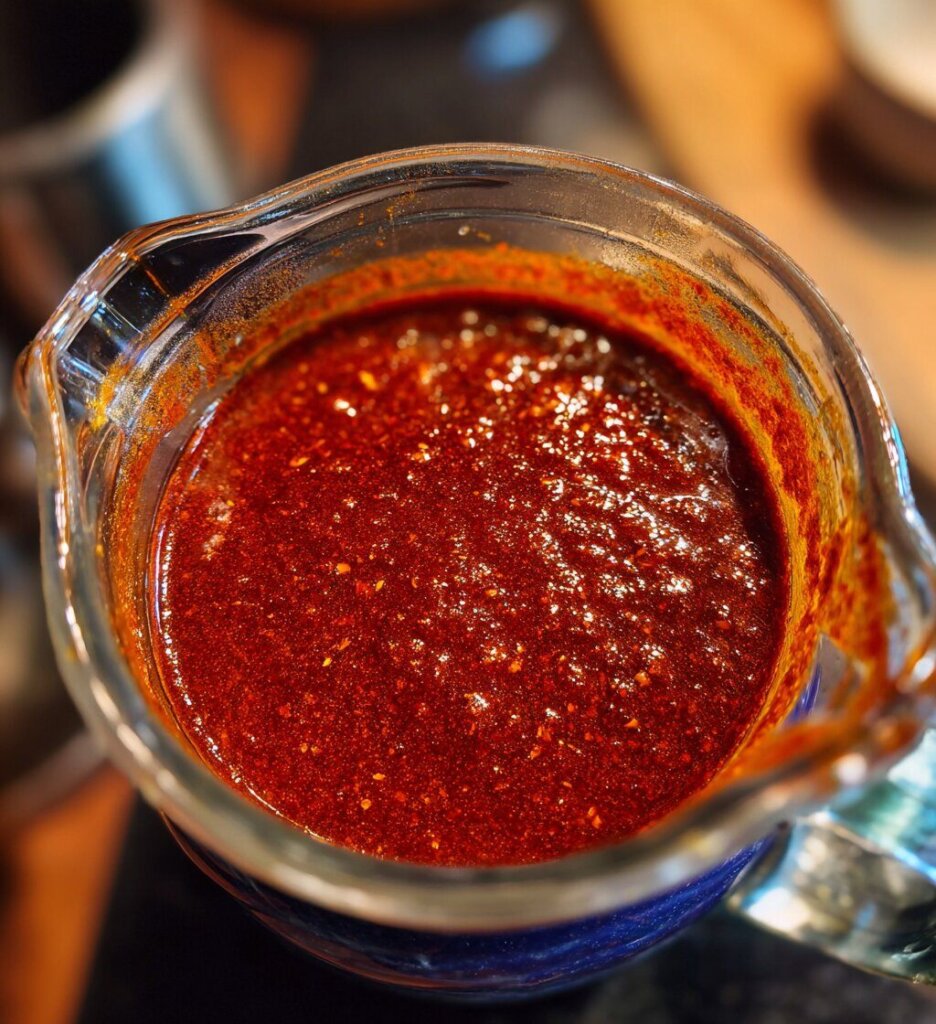
Remove the meat and shred it with two forks. It should yield effortlessly. Crucial Step: Strain the broth! You want a smooth, drinkable consomé for the ramen, not a chunky sauce full of tomato skins and chile seeds. Pass the liquid through a fine-mesh sieve. Skim off some of the red fat from the top (save it for frying eggs or tacos later!), but leave enough to give the soup body.
Phase 4: Assembly
Cook your noodles separately in boiling water. Drain well. Place noodles in a bowl. Ladle the hot, red consomé over the noodles. Top with a mountain of shredded beef. Add your garnishes: soft-boiled egg, chopped cilantro, diced white onion, radish slices, and a squeeze of lime.
Chef Noah’s Tips for Success
1. Don’t Boil the Noodles in the Consomé Ramen noodles release a lot of starch when they cook. If you boil them directly in your precious Birria broth, the broth will turn thick, cloudy, and starchy. Cook the noodles in a separate pot of water, drain them, and then combine.
2. The “Dip” Experience If you have leftover tortillas, serve a cheese quesadilla on the side. The trend is to dip the quesadilla into the ramen broth between bites of noodles. It is carbohydrate heaven.
3. Seasoning Check Ramen broth needs to be slightly saltier than a regular soup because the noodles are unseasoned. Taste your consomé before serving. If it tastes “good,” add a pinch more salt or a splash of soy sauce so it tastes “bold” when eaten with noodles.
4. Storage Birria tastes better the next day. The flavors meld and the fat rises to the top (making it easier to skim). You can make the meat and broth 2 days in advance, then just boil noodles when you are ready to eat.
Variations and Dietary Swaps
- Chicken Birria: If you don’t eat red meat, you can use chicken thighs. Follow the same process, but reduce the cooking time to 45 minutes. It will be lighter but still flavorful.
- Spicy Level: As mentioned, control the heat with the Chiles de Árbol. 0 for mild, 2 for medium, 5+ for spicy.
- Gluten-Free: Use rice noodles or 100% buckwheat soba noodles instead of wheat ramen.
- The “Cheesy” Ramen: Stir a handful of shredded Oaxaca or Mozzarella cheese directly into the hot broth. It melts into the noodles for a gooey, cheesy pull (similar to Korean Army Stew).
What to Serve with Birria Ramen
This is a very heavy meal, so keep the sides light and acidic.
- Cucumber Salad: Chili-lime cucumbers add a nice crunch.
- Elote (Corn): Mexican street corn is a classic pairing.
- Agua Fresca: A hibiscus (Jamaica) or Tamarind drink cuts the richness perfectly.
- Chips and Guacamole: Always a crowd pleaser.
Final Thoughts
Birria Ramen is more than just a viral trend; it is a celebration of bold flavors and slow cooking. It takes patience, but the reward is a bowl of soup that warms you from the inside out.
It is savory, spicy, sour, and comforting all at once. Whether you make it for a rainy day or a dinner party to impress your friends, this fusion dish is guaranteed to be a hit.
So, gather your dried chiles, find a good playlist, and let the pot simmer.
Happy Cooking! Chef Noah
Print
Birria Ramen: The Ultimate Mexican-Japanese Fusion Comfort Food
- Total Time: 4 hours
- Yield: 4 Servings 1x
- Diet: Halal
Description
The ultimate fusion comfort food. Tender Mexican shredded beef stew (Birria) served as a rich broth for Japanese ramen noodles.
Ingredients
- 2 lbs Beef Chuck Roast
- 1 lb Short Ribs
- 4 Guajillo Chiles
- 2 Ancho Chiles
- 4 packs Ramen Noodles
- 1/2 White Onion
- 5 cloves Garlic
- 4 cups Beef Broth
- 1 tsp Oregano
- 1/4 cup Apple Cider Vinegar
Instructions
- Toast and soak dried chiles. Blend with spices, vinegar, and aromatics to make Adobo.
- Sear beef in a pot. Add Adobo and broth. Simmer for 3 hours until tender.
- Remove beef and shred. Strain the liquid to create the Consomé.
- Cook ramen noodles separately.
- Assemble bowls with noodles, Consomé, and beef. Top with cilantro, onion, and egg.
Notes
- Chiles: Removing seeds reduces heat but keeps the flavor.
- Noodles: Do not cook noodles in the broth or it will become starchy.
- Make Ahead: The beef and broth taste even better the next day.
- Prep Time: 30 minutes
- Cook Time: 3 hours 30 minutes
- Category: Dinner
- Method: Braise
- Cuisine: Mexican-Japanese Fusion
Nutrition
- Serving Size: 1 Bowl
- Calories: 750 kcal
- Sugar: 4g
- Sodium: 1200mg
- Fat: 35g
- Saturated Fat: 12g
- Unsaturated Fat: 18g
- Trans Fat: 0g
- Carbohydrates: 65g
- Fiber: 6g
- Protein: 45g
- Cholesterol: 180mg
Keywords: Birria Ramen Recipe, Beef Birria Stew, Mexican Ramen, Consome Recipe, Birria de Res, Fusion Noodle Soup